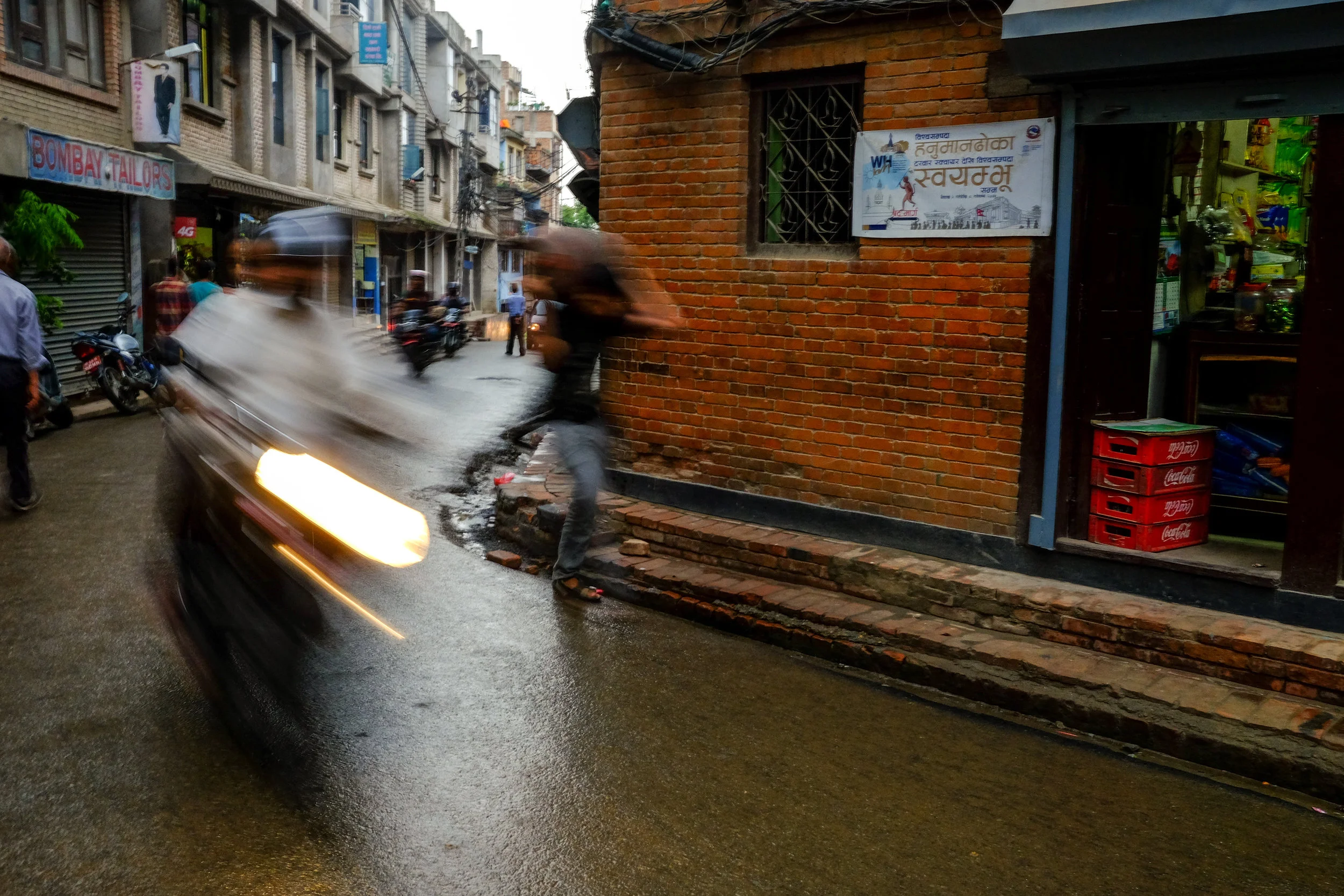
For the EID holidays I took the short flight from Doha to Kathmandu. The bustling capital of Nepal is usually a trekker's first stop in the country and an ideal place to stock up on essential items before embarking on one of the country's famous walks in the Himalayas.
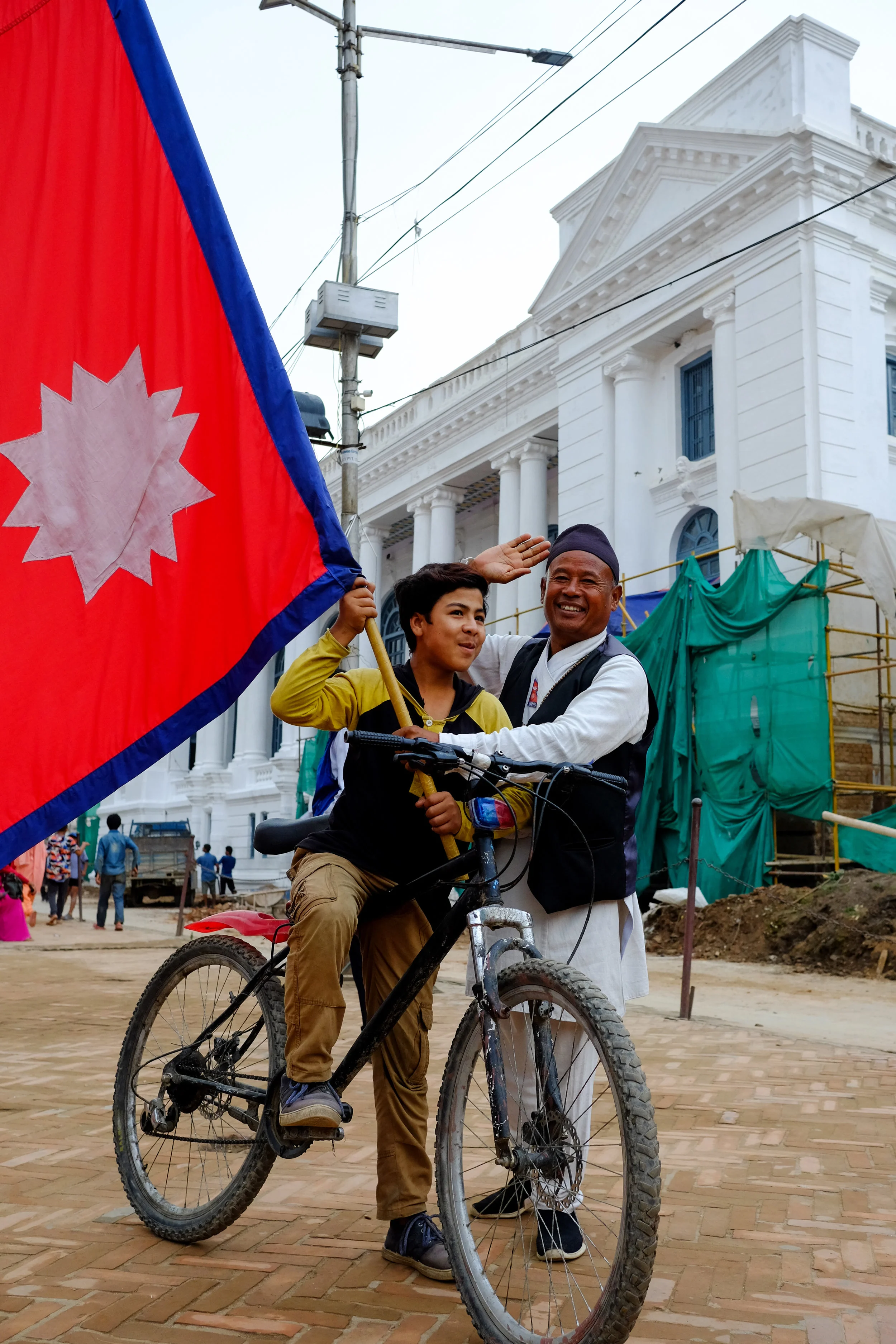
A Nepali boy with a flag seller in Durbar Square.
However, as I was to be in Nepal for just six days I didn't have enough time to fly deep into the mystical valleys that cut the country off from neighbouring Tibet.
This gave me ample time to stroll the cobbled and down right muddy streets of Kathmandu, Patan and Bhaktapur.
My first stop in Kathmandu was Durbar Square. The UNESCO heritage site is situated in front of the old royal palace of the former Kathmandu Kingdom and is one of three Durbar (royal palace) Squares in the Kathmandu Valley.
I shrugged off a number of dubious looking tour guides who approached me and instead walked around looking for subject matter, of which there was plenty.
I entered the Kumari Chok, the cage like residence that houses the Raj Kumari, a girl chosen through an ancient and mystical selection process to become the human incarnation of the Hindu mother goddess, Durga.
After around five minutes of waiting the four year old clambered to the balcony to wave at tourists and locals waiting patiently to catch a glimpse of the girl plucked from her family home. Taking photos of the youngster, who is released back into civilisation as she enters womanhood, are forbidden but snapping her would have difficult as within in ten seconds she was gone, slumping back to her minders.
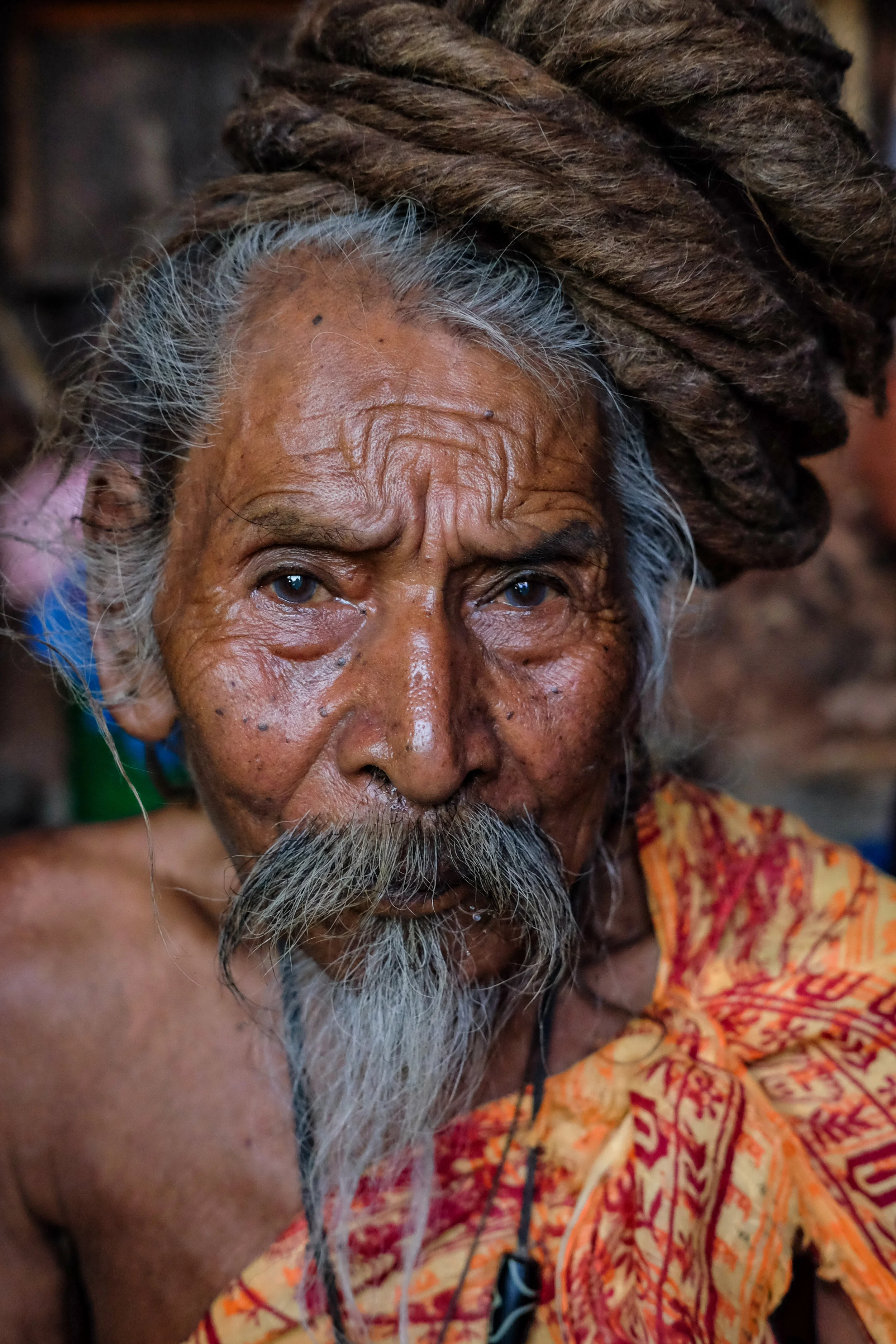
Babas, spiritual masters who are regarded by devotees as saint like, dot the square and are more than willing to pose for a photo for a small price. After waiting for a torrential afternoon downpour to falter I approached this man sitting by a temple, seemingly waiting for tourists to pose for a photo with him.
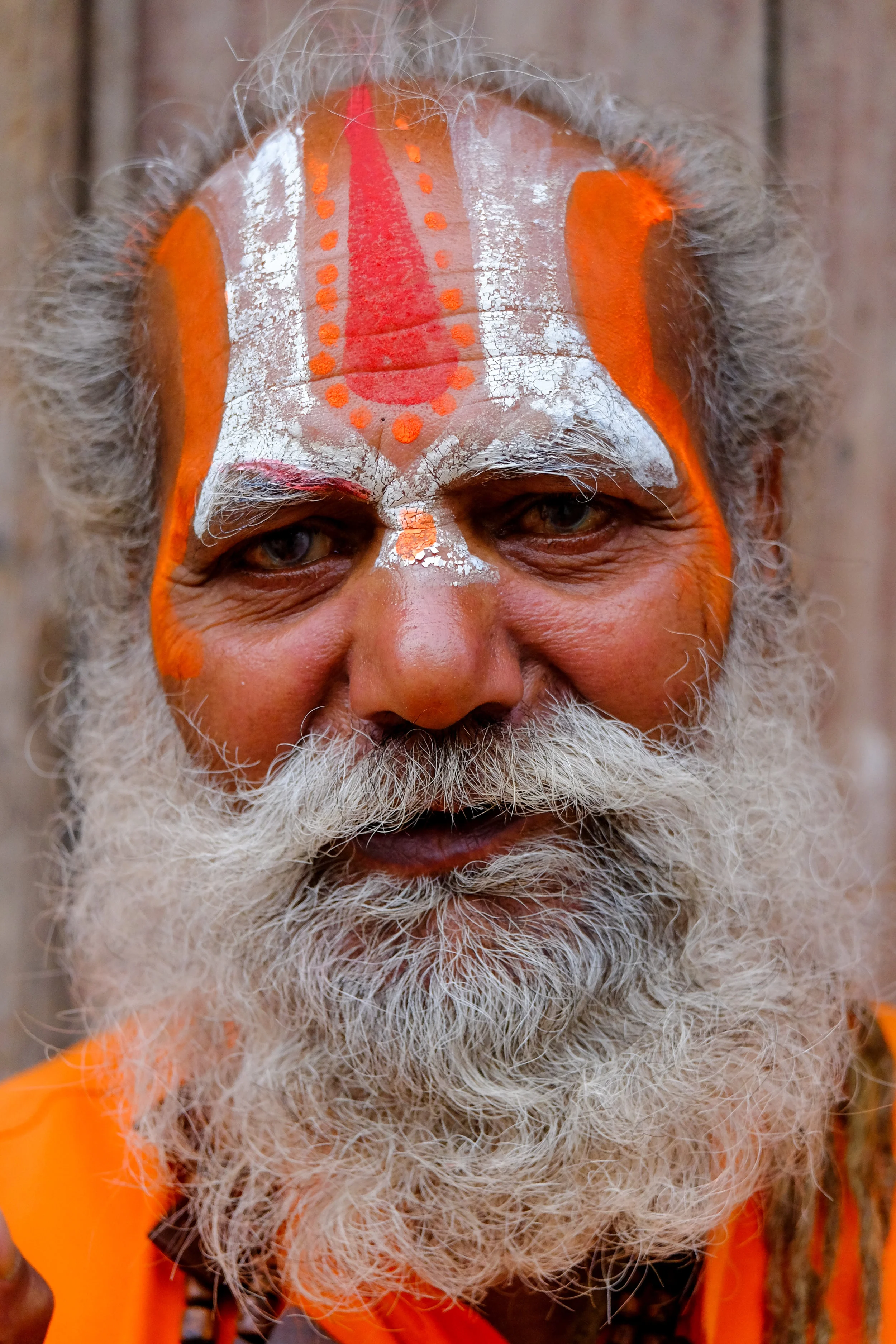
I came across this Baba on Durbar Square. He muttered inaudibly as I took some photos of him.
This gentleman was not happy with the amount I gave him for the photo but I was not willing to pay him his $10 asking price for a few minutes of his time. I was to meet other Babas at other religious monuments in Nepal who didn't demand as much and seemed flattered to be my subject.
Next to Durbar Squares lies Asan Tole market. Stalls, narrow alleyways and vendors selling everything from balloons to chickens make this spot a must for street photographers. The splash of sunlight, that sneaks onto the paths, coupled with the vibrant masses that frequent this place makes this one of the best sports to shoot in Kathmandu.
One benefit of visiting Nepal during rainy season is the use of colourful umbrellas. I didn't see a dull coloured brolly during my six day visit and this creates an interesting background for subjects as they shop.
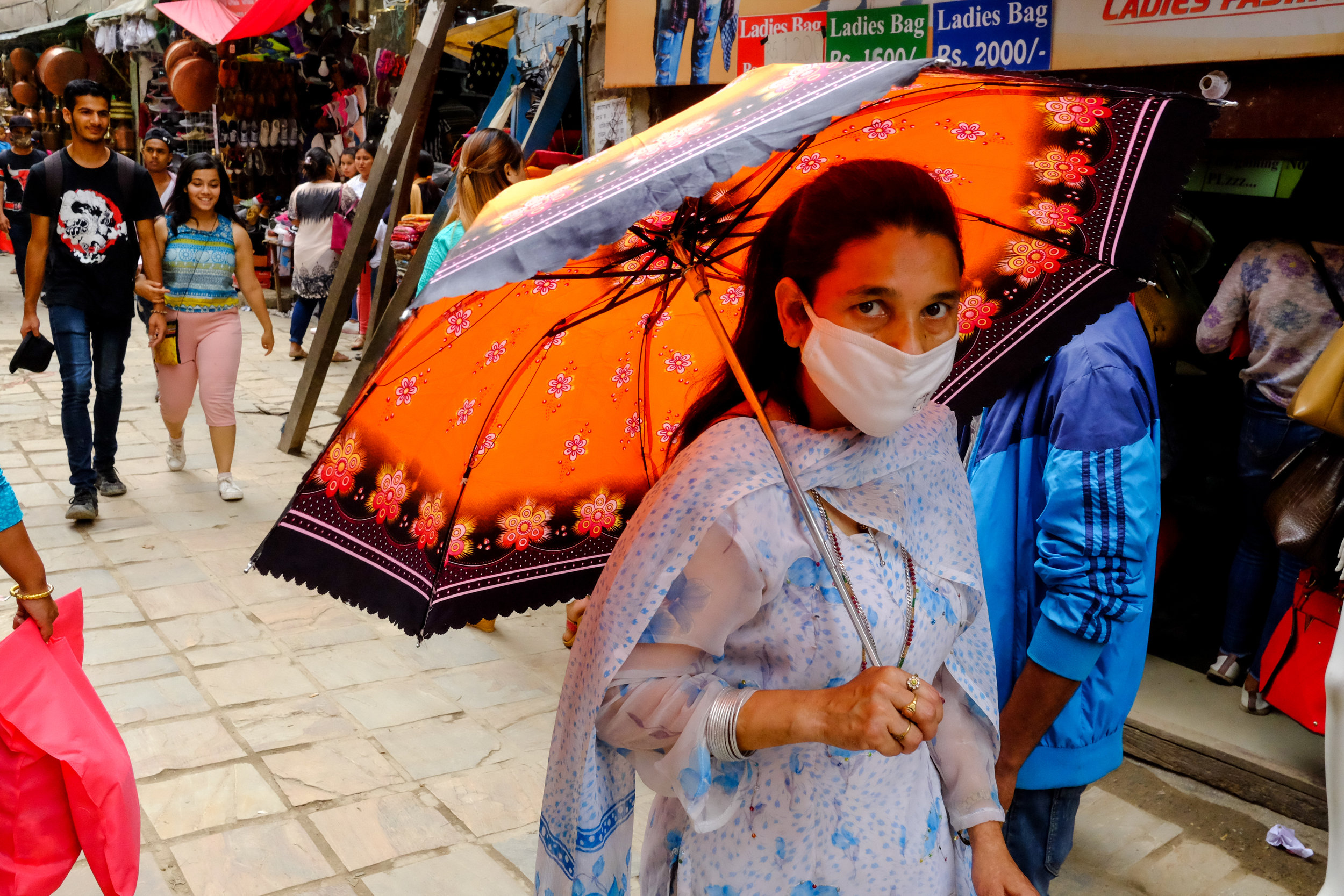
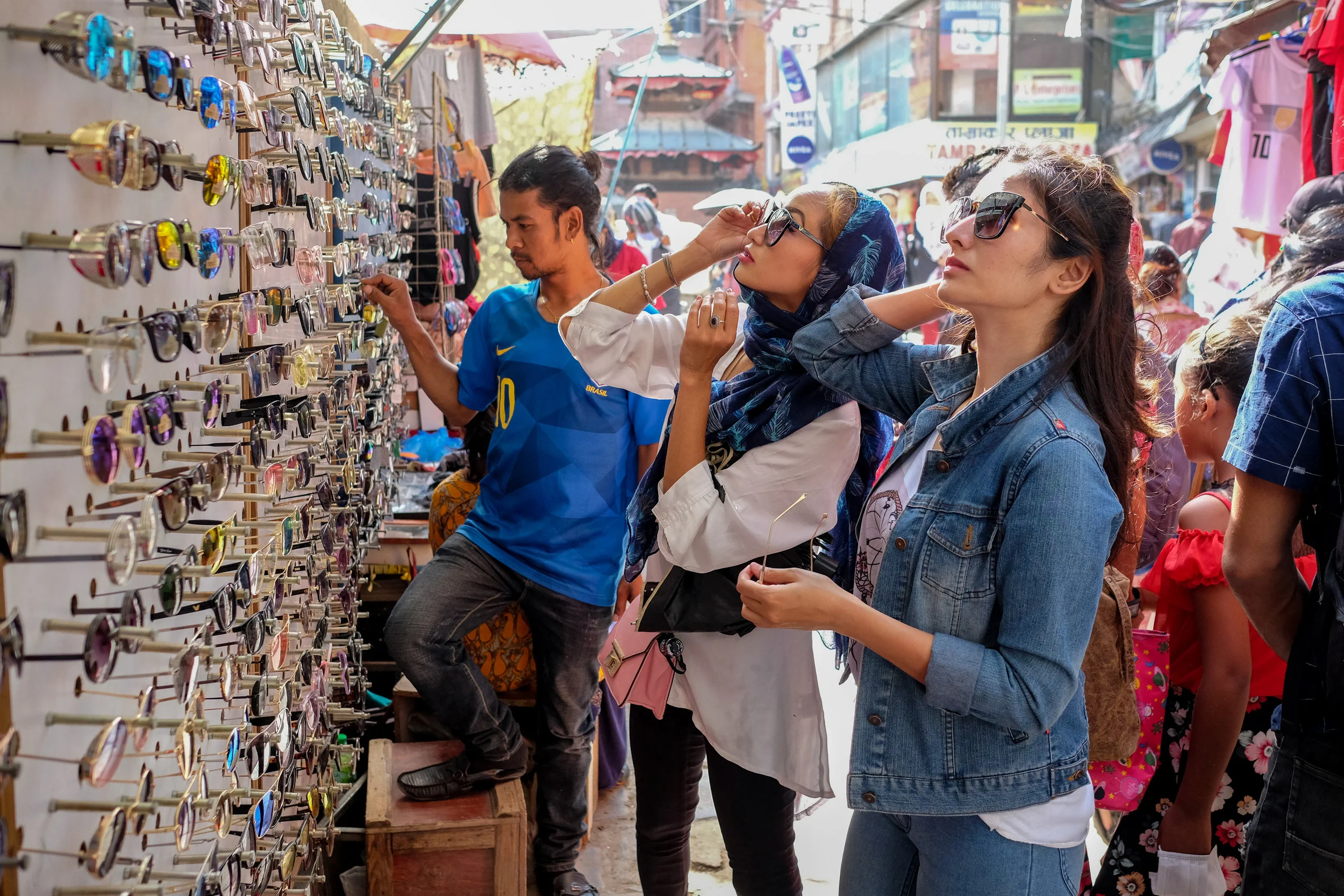
After around an hour of wandering the streets of Asan Tole, shopping for moments and not anything material, I decided to venture back to my hotel in the Thamel district. Then the rain started again.
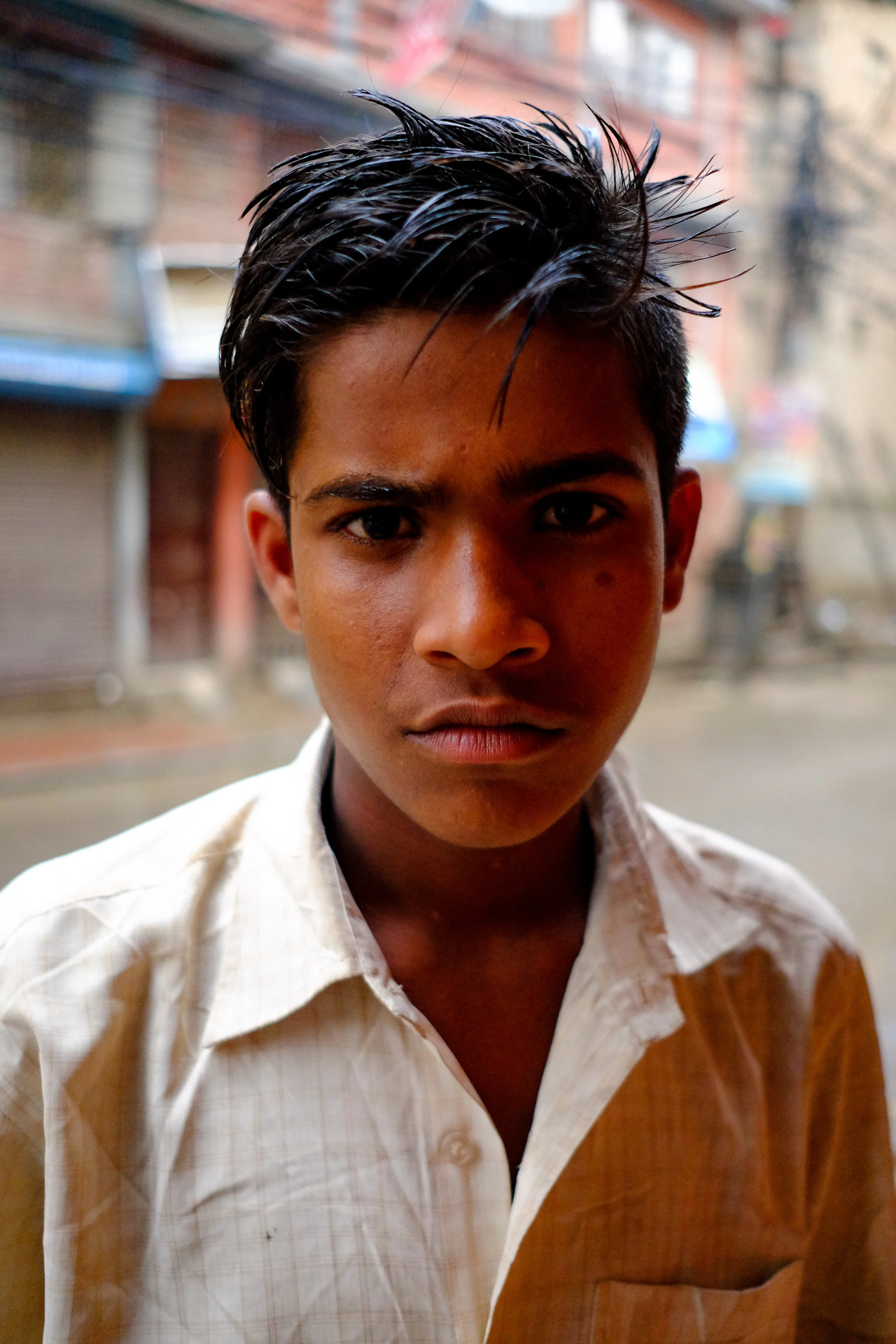
Being an Englishman used to getting caught out in the wet I tried to brave the storm but had to take shelter under the roof of a shop half way to my destination after getting drenched.
After around five minutes of watching the rain flood the many pot holes in the road and scooters nosily hurtling passed, two youngsters who sell balloons in Asan Tole sprinted for cover. We struck up a conversation and one agreed to have his photo taken. His serious expression and gloomy background made for a interesting portrait.
A ‘must see’ location in Kathmandu is Pashupatinath Temple.
The most holy Hindu temple in Nepal lies on the Bagmati River and is where the deceased are cremated in the open as family, friends and people on a day out watch on.
Bodies arrive at the temple through the day and evening. After the cadavers are unwrapped from the orange sheets that cover them, their feet are dipped in the river and water from the holy river is placed in their mouths.
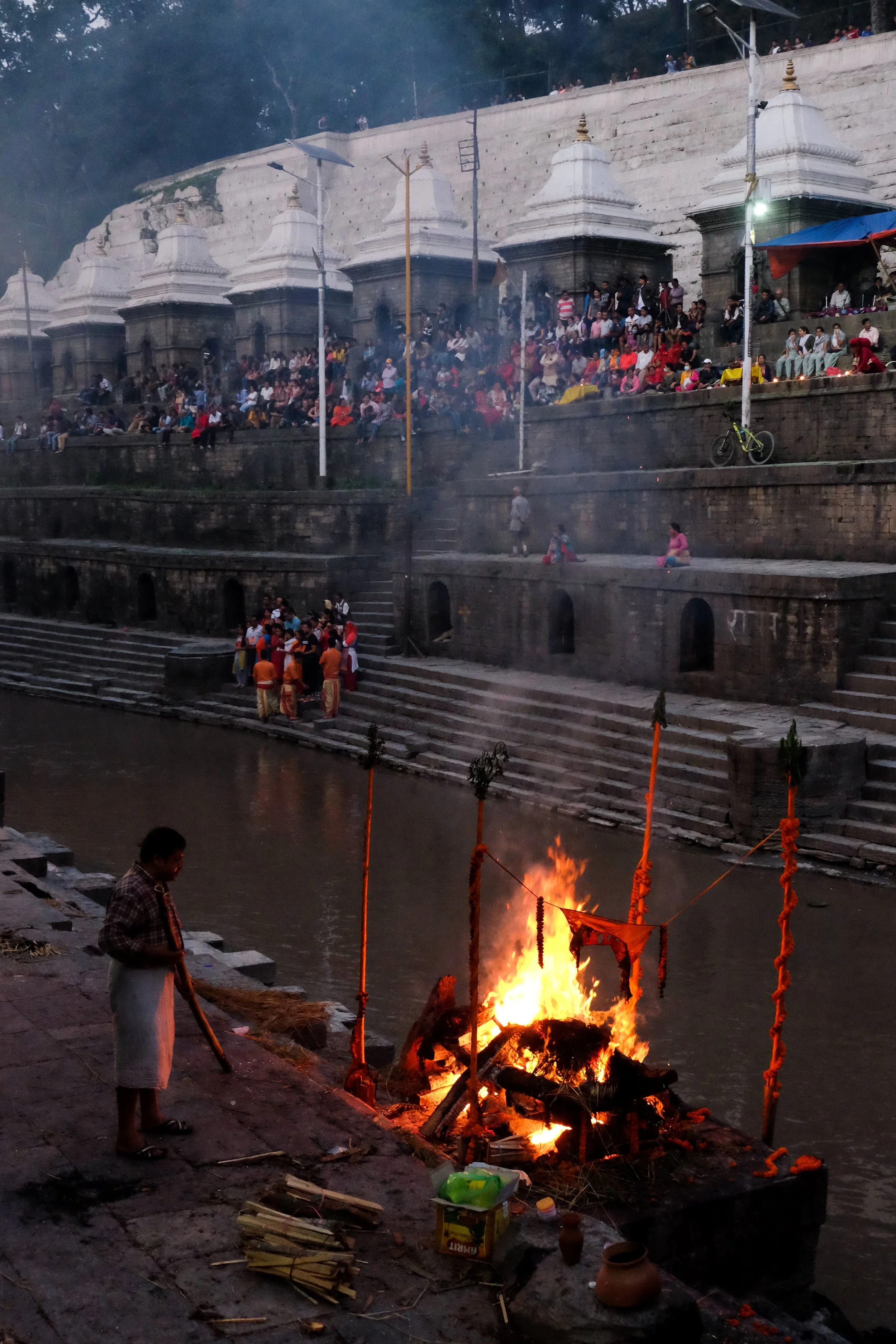
Priests chant before the deceased are placed on wooden stalls and set alight. Smoke from the numerous cremations taking place at the same time envelopes the area and smell of burning flesh taints the air.
Monkeys patrol the buildings across the river, looking for scraps of food on the floor or in the hands of visitors to the holy site.
I regard myself as a relatively well travelled man but I had never seen anything quite like this.
Photography is only allowed in some quarters of the temple out of respect for the grieving families and the dead, and yet it still okay to walk around with your camera on show.
Babas encourage you to take their photograph and, while standing from afar you can capture undertakers prodding the burning corpses. Should you decide to walk up to a body you may be able to see blistering body parts and, after the flesh has been burned bones sticking out, as I did.
The most interesting Baba I photographed at Pashupatinath Temple was resting in a courtyard away from the river. With a long beard, long platted hair taken to one side of his head and a walking stick I had to take his picture. As the sun had all but set I shone the light from my iPhone on the side of his face to illuminate his evocotive features.
Another a famous landmark that comes with my strong recommendation is the Boudhanath, located around 7 miles from the centre of Kathmandu.
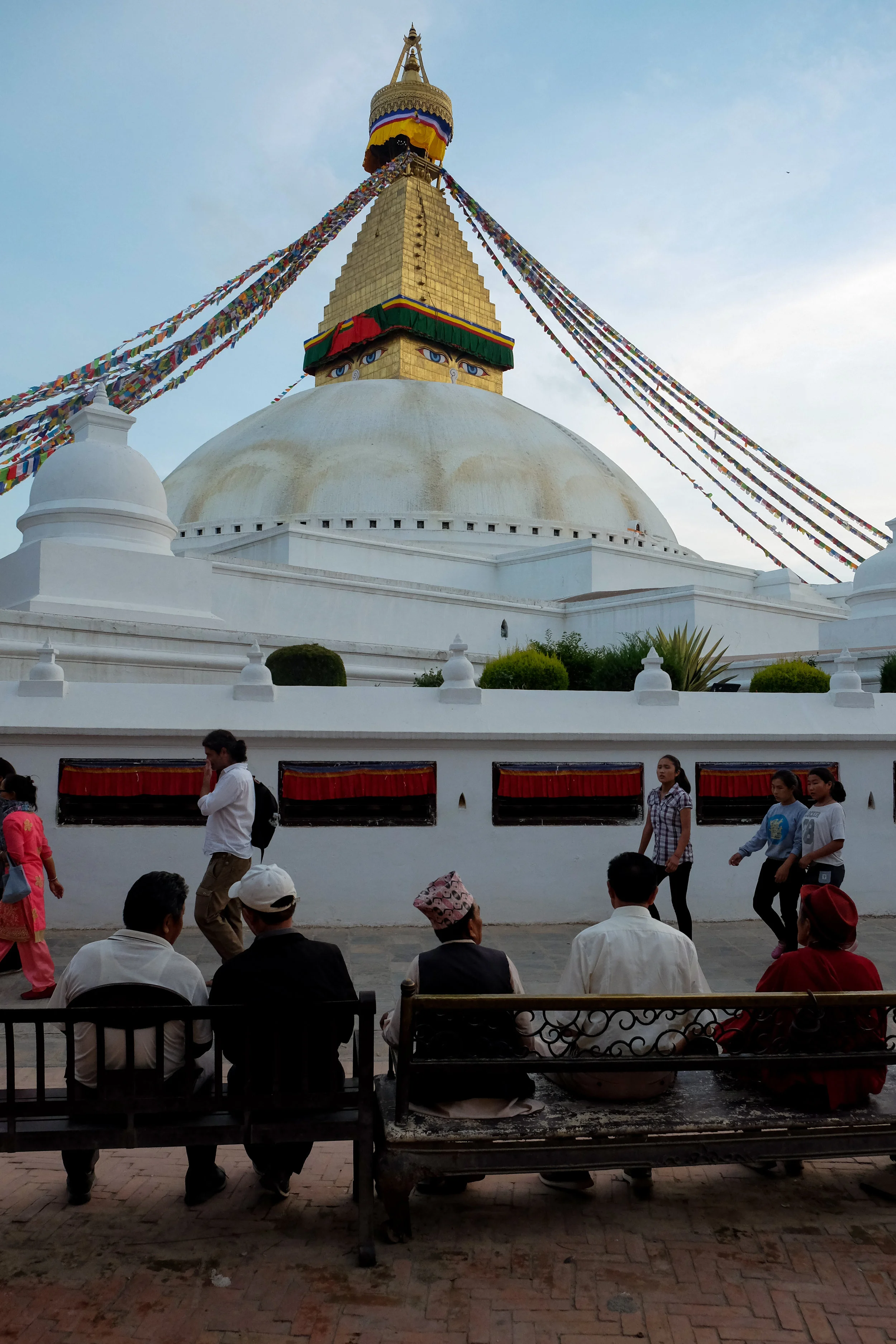
The Buddhist stupa, one of the largest in the world, dominates the skyline and its image is one rather synonymous with Kathmandu. The influx of large populations of refugees from Tibet has seen the construction of over 50 gompas (Tibetan convents) around Boudha.
Pilgrims scan their hands across the prayer wheels on the outside of the temple while others chat among themselves at the monument as though they were at a social gathering. If it wasn't for the Mount Everest looming far in the distance the Stupa may have been considered the country's centrepiece with its four sets of eyes following your very step as you walk by.
As the crowds dispersed in the evening the lack of light provided photographic challenges but also created unexpected opportunity.
A lady who was selling candles by the side of Stupa was illuminated by the yellowy tones, making for dynamic light and subject matter that probably wouldn't have worked in the unforgiving Nepalese sun.
