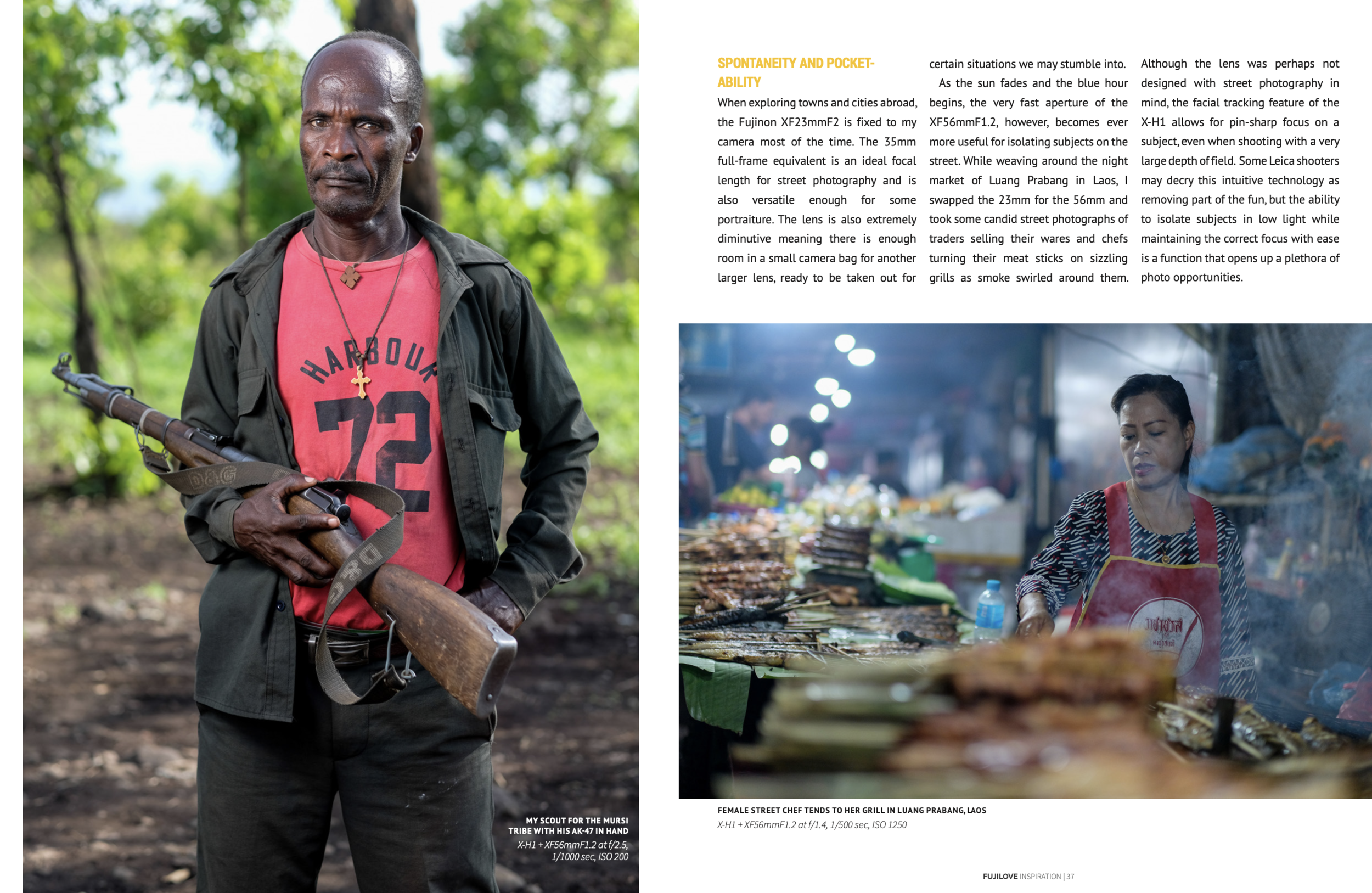
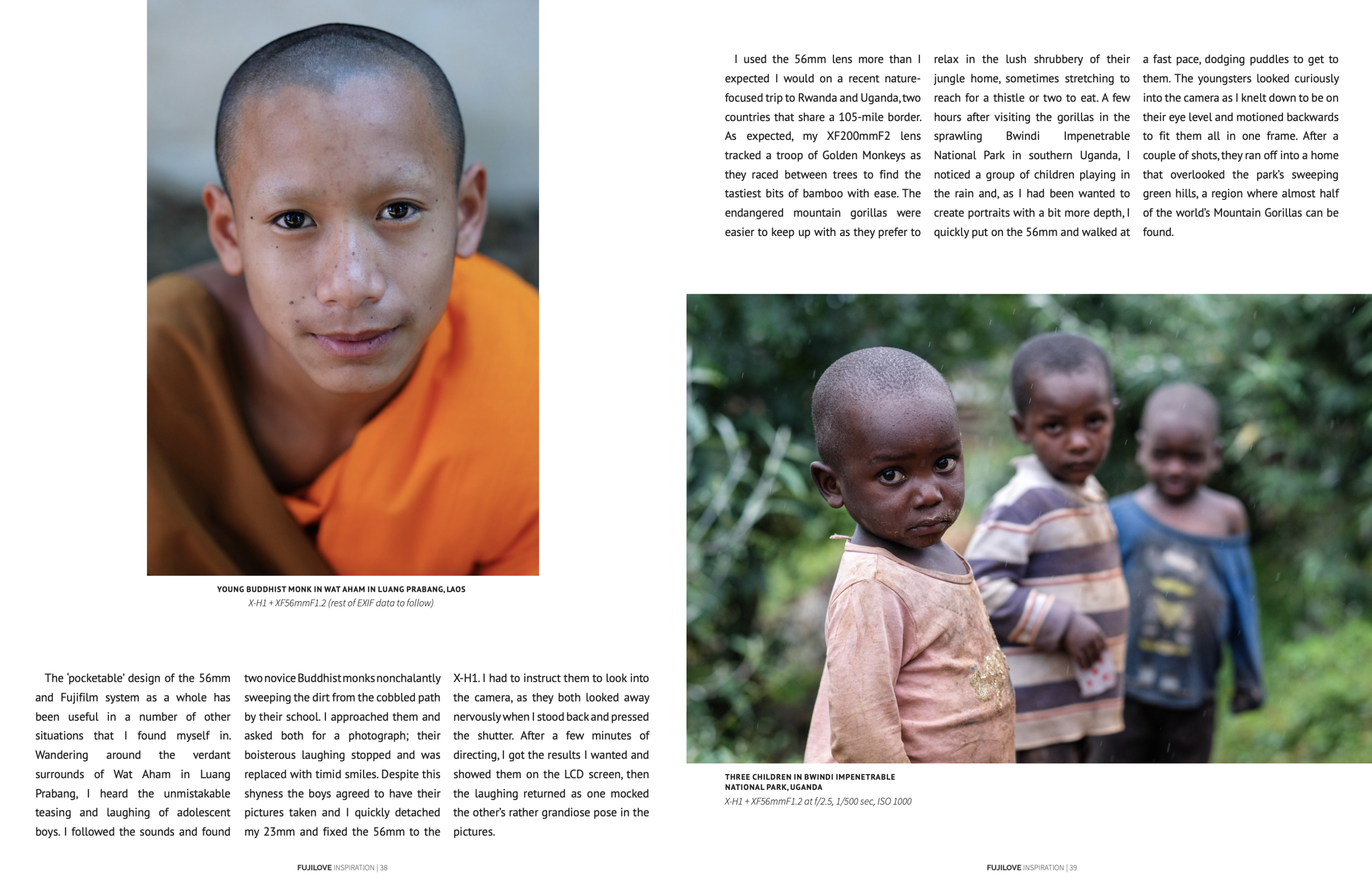
New Article in FujiLove Magazine
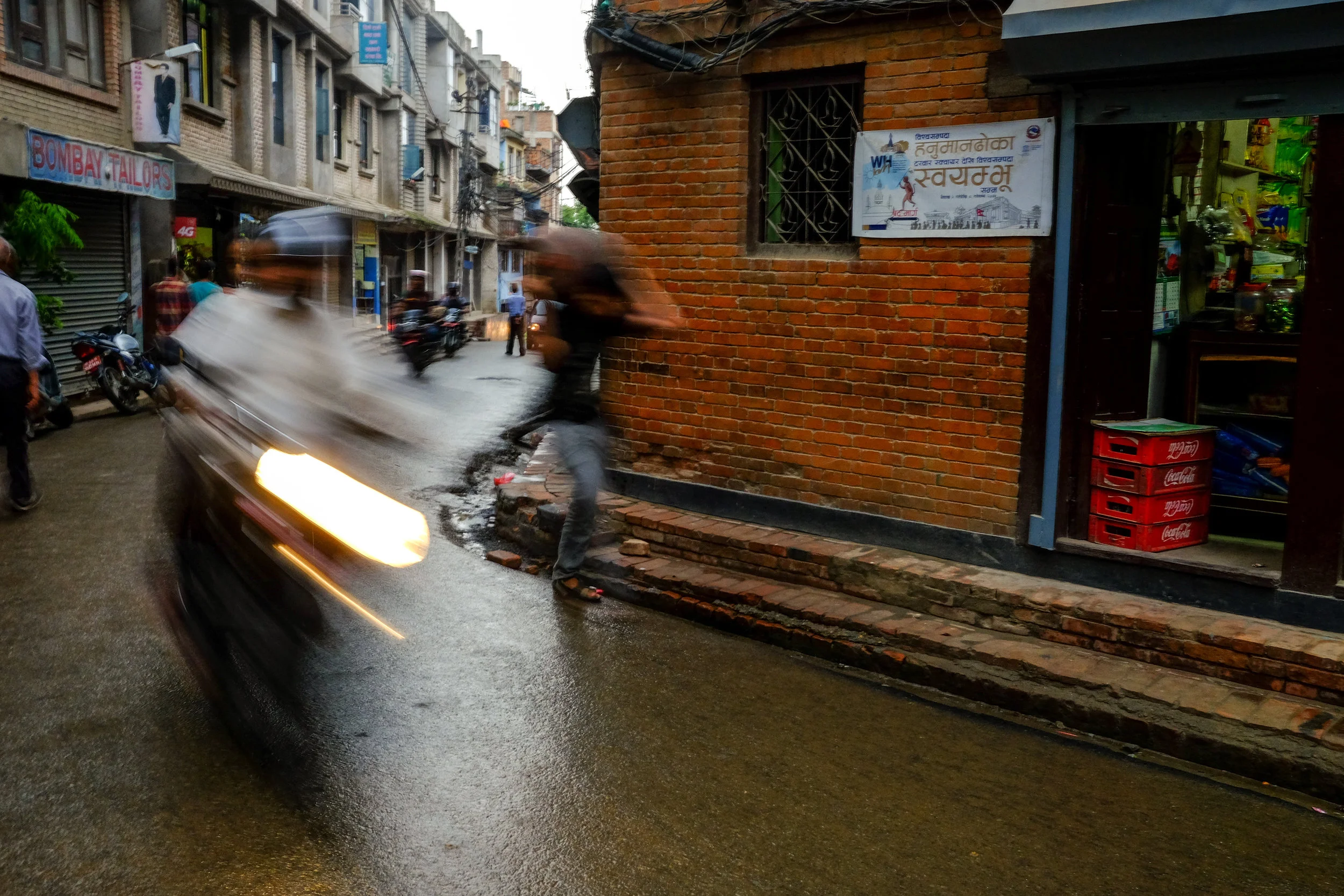
Street Photography in Kathmandu, Nepal
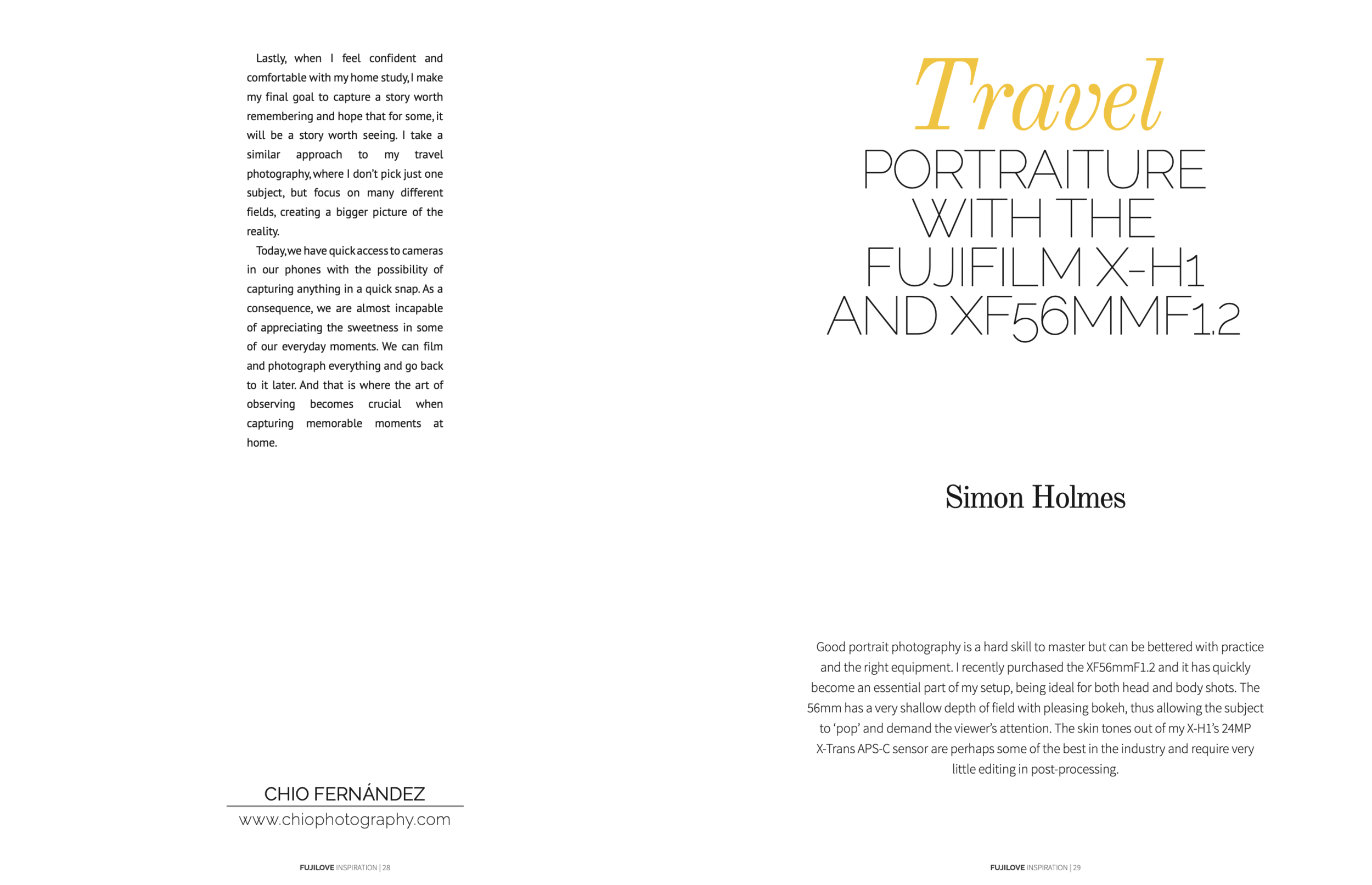
For the EID holidays I took the short flight from Doha to Kathmandu. The bustling capital of Nepal is usually a trekker's first stop in the country and an ideal place to stock up on essential items before embarking on one of the country's famous walks in the Himalayas.
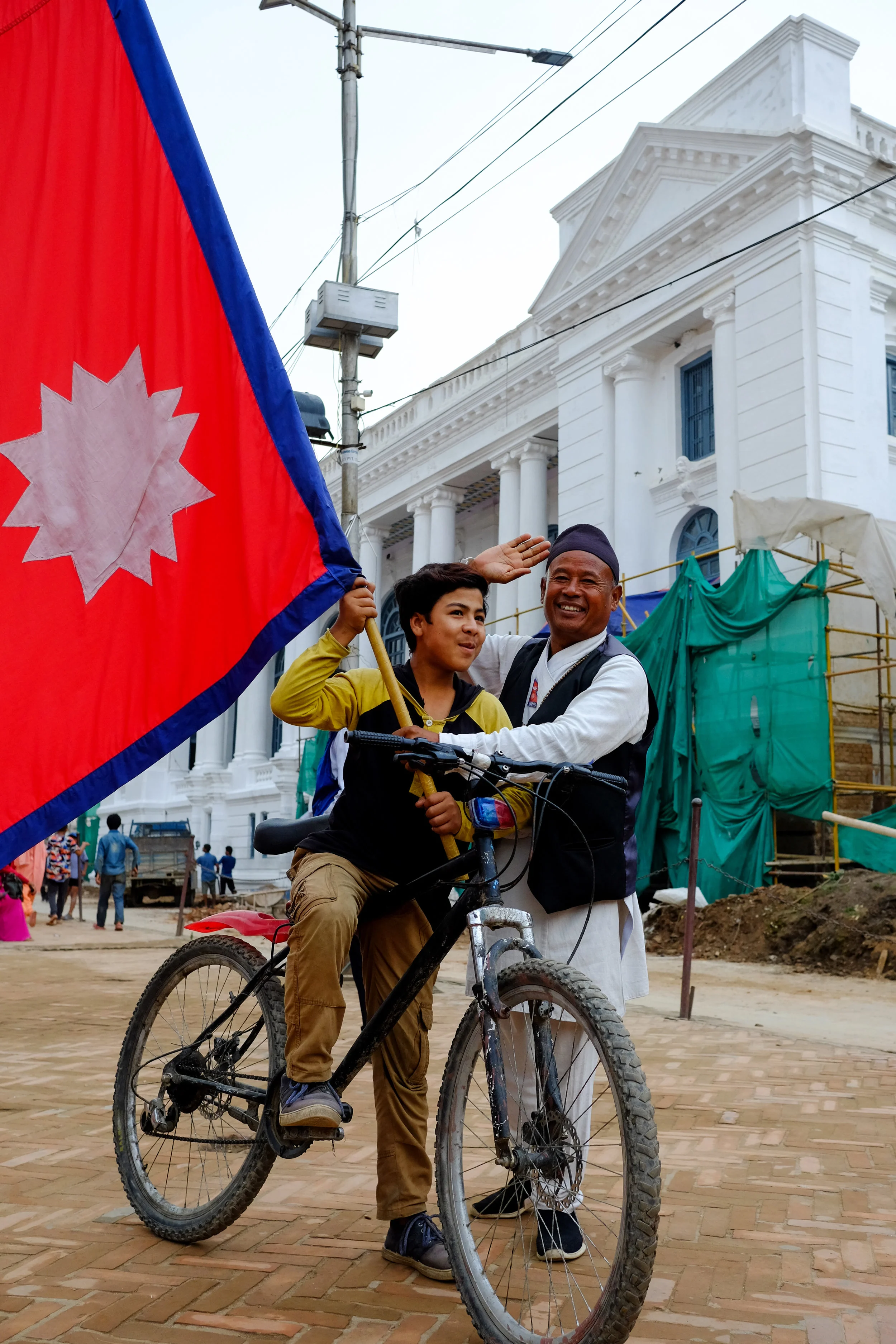
A Nepali boy with a flag seller in Durbar Square.
However, as I was to be in Nepal for just six days I didn't have enough time to fly deep into the mystical valleys that cut the country off from neighbouring Tibet.
This gave me ample time to stroll the cobbled and down right muddy streets of Kathmandu, Patan and Bhaktapur.
My first stop in Kathmandu was Durbar Square. The UNESCO heritage site is situated in front of the old royal palace of the former Kathmandu Kingdom and is one of three Durbar (royal palace) Squares in the Kathmandu Valley.
I shrugged off a number of dubious looking tour guides who approached me and instead walked around looking for subject matter, of which there was plenty.
I entered the Kumari Chok, the cage like residence that houses the Raj Kumari, a girl chosen through an ancient and mystical selection process to become the human incarnation of the Hindu mother goddess, Durga.
After around five minutes of waiting the four year old clambered to the balcony to wave at tourists and locals waiting patiently to catch a glimpse of the girl plucked from her family home. Taking photos of the youngster, who is released back into civilisation as she enters womanhood, are forbidden but snapping her would have difficult as within in ten seconds she was gone, slumping back to her minders.
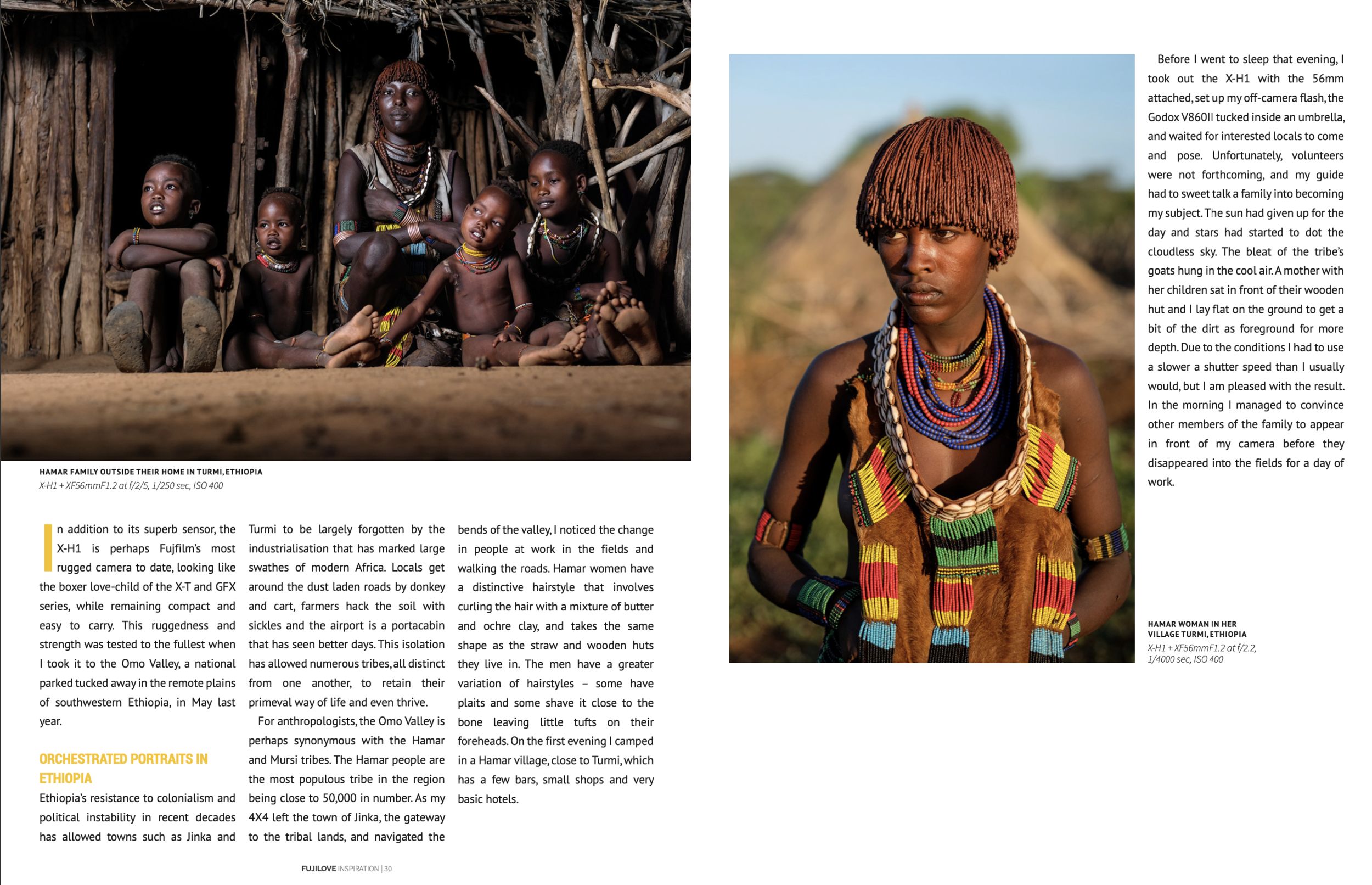
Babas, spiritual masters who are regarded by devotees as saint like, dot the square and are more than willing to pose for a photo for a small price. After waiting for a torrential afternoon downpour to falter I approached this man sitting by a temple, seemingly waiting for tourists to pose for a photo with him.
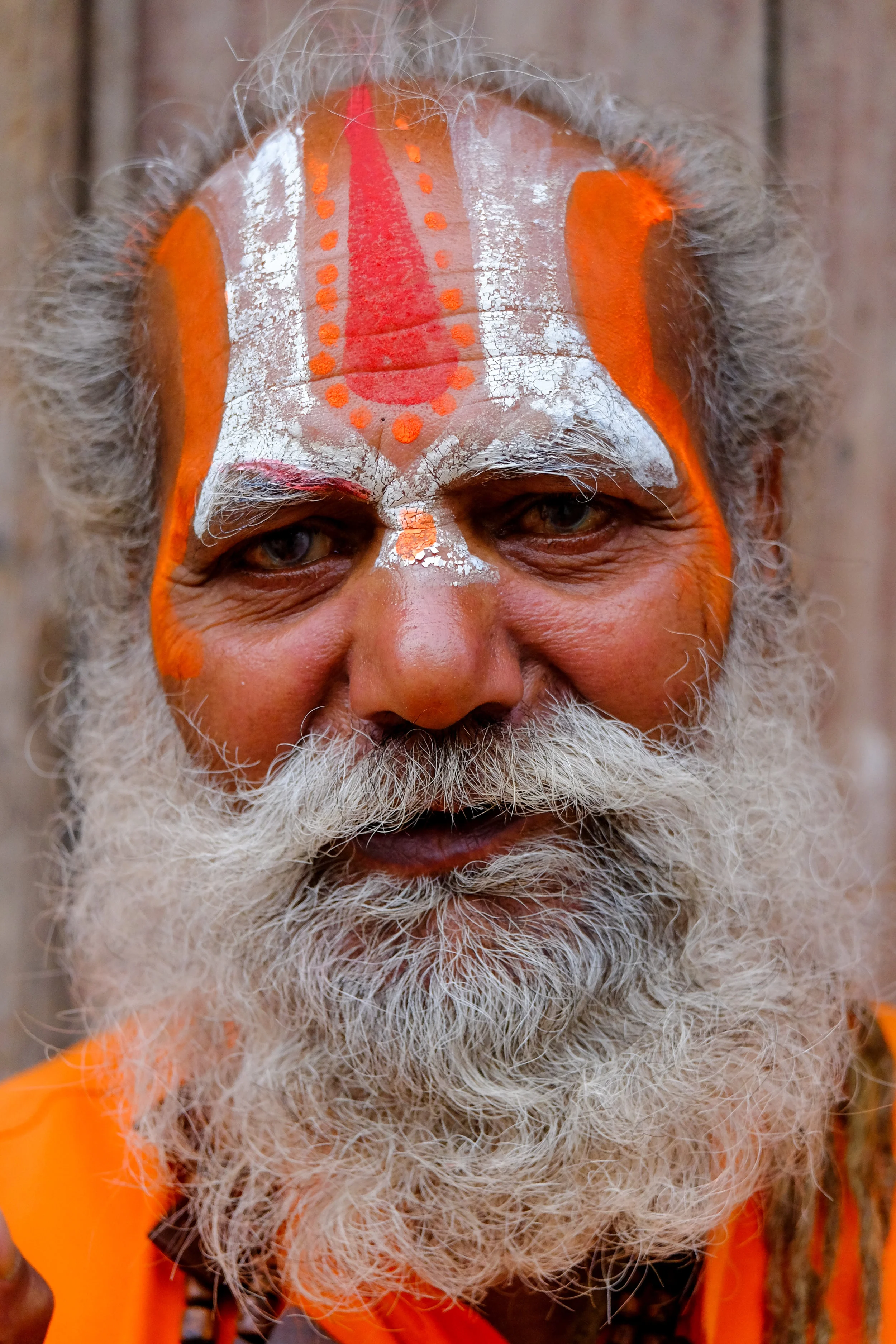
I came across this Baba on Durbar Square. He muttered inaudibly as I took some photos of him.
This gentleman was not happy with the amount I gave him for the photo but I was not willing to pay him his $10 asking price for a few minutes of his time. I was to meet other Babas at other religious monuments in Nepal who didn't demand as much and seemed flattered to be my subject.
Next to Durbar Squares lies Asan Tole market. Stalls, narrow alleyways and vendors selling everything from balloons to chickens make this spot a must for street photographers. The splash of sunlight, that sneaks onto the paths, coupled with the vibrant masses that frequent this place makes this one of the best sports to shoot in Kathmandu.
One benefit of visiting Nepal during rainy season is the use of colourful umbrellas. I didn't see a dull coloured brolly during my six day visit and this creates an interesting background for subjects as they shop.
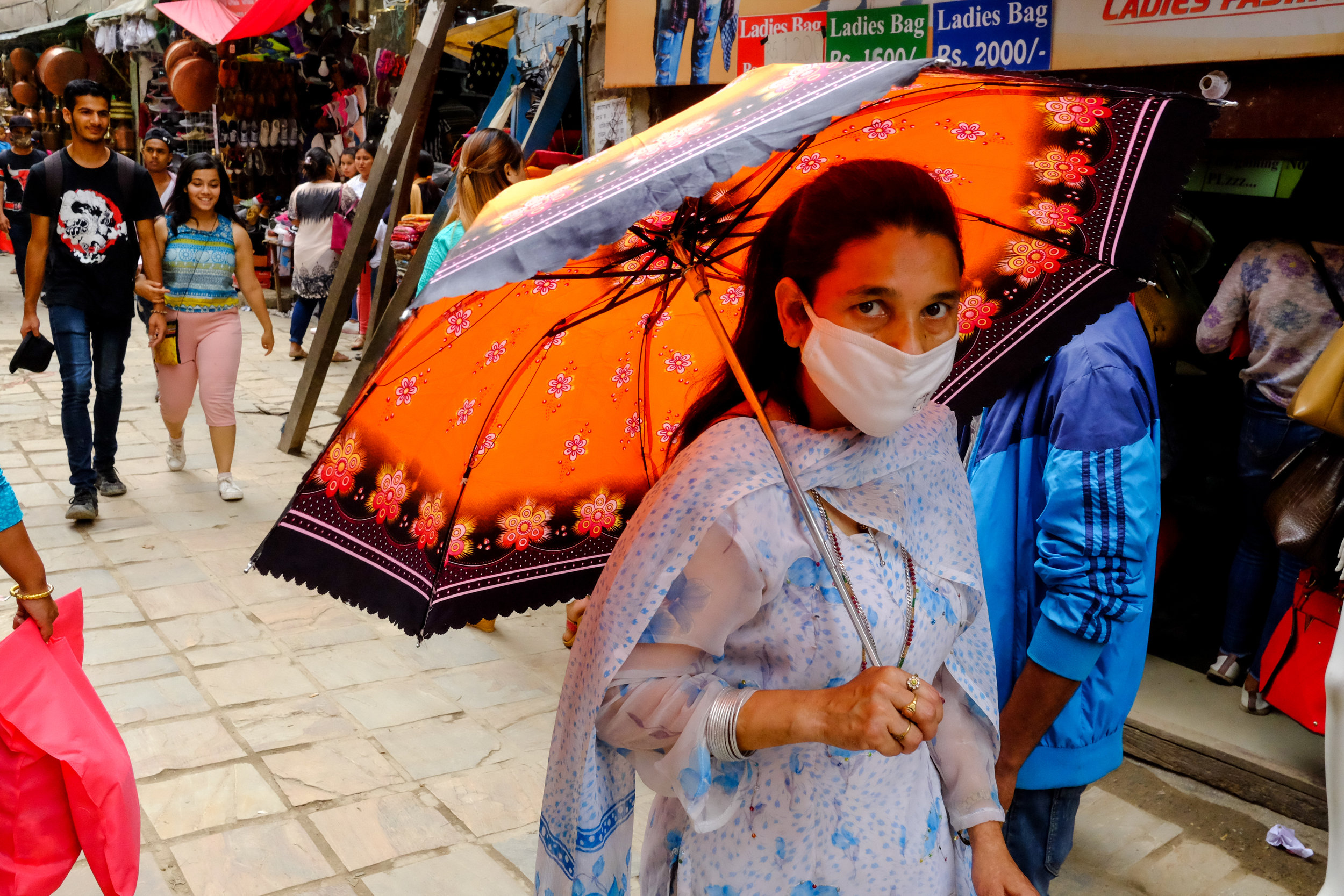
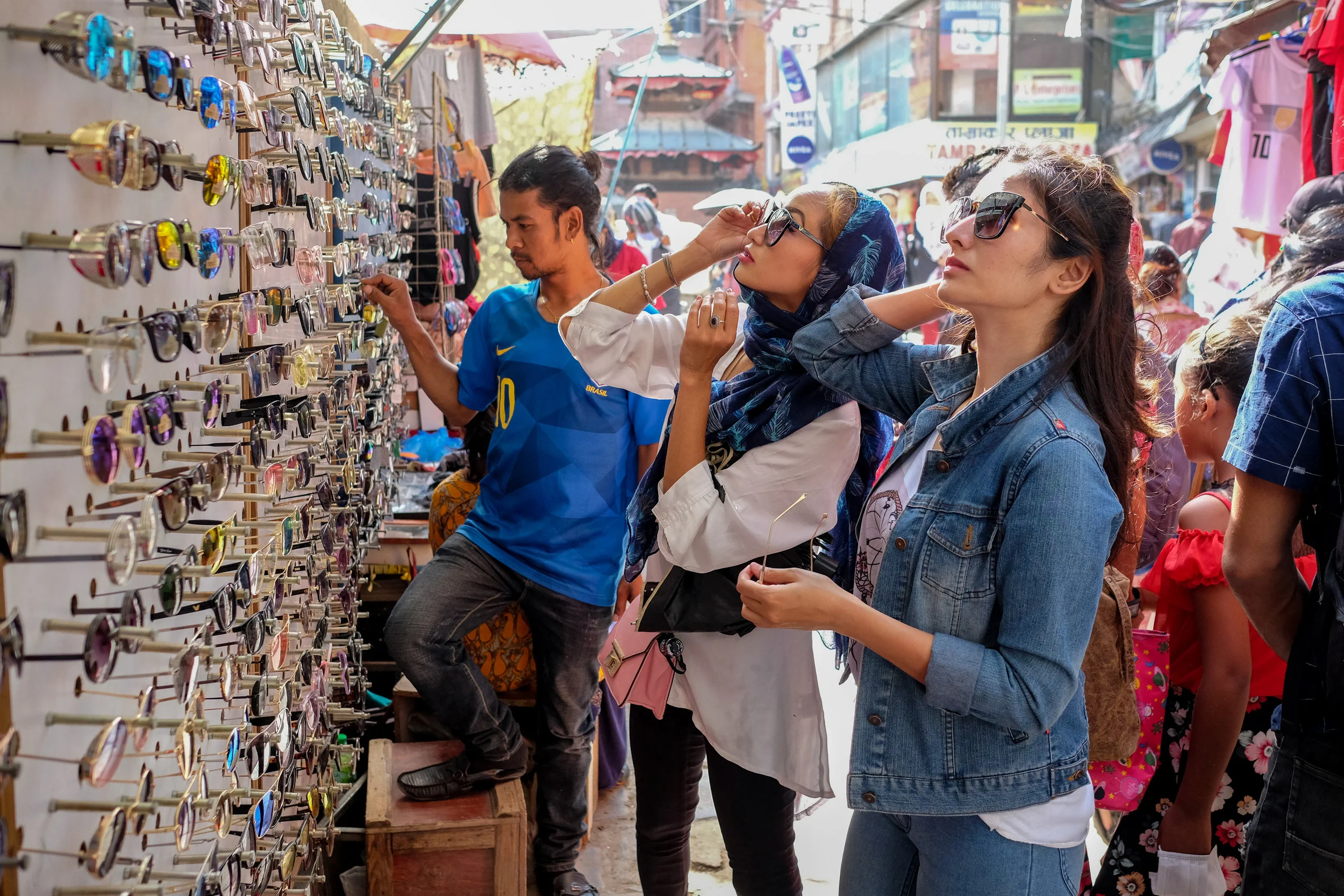
After around an hour of wandering the streets of Asan Tole, shopping for moments and not anything material, I decided to venture back to my hotel in the Thamel district. Then the rain started again.
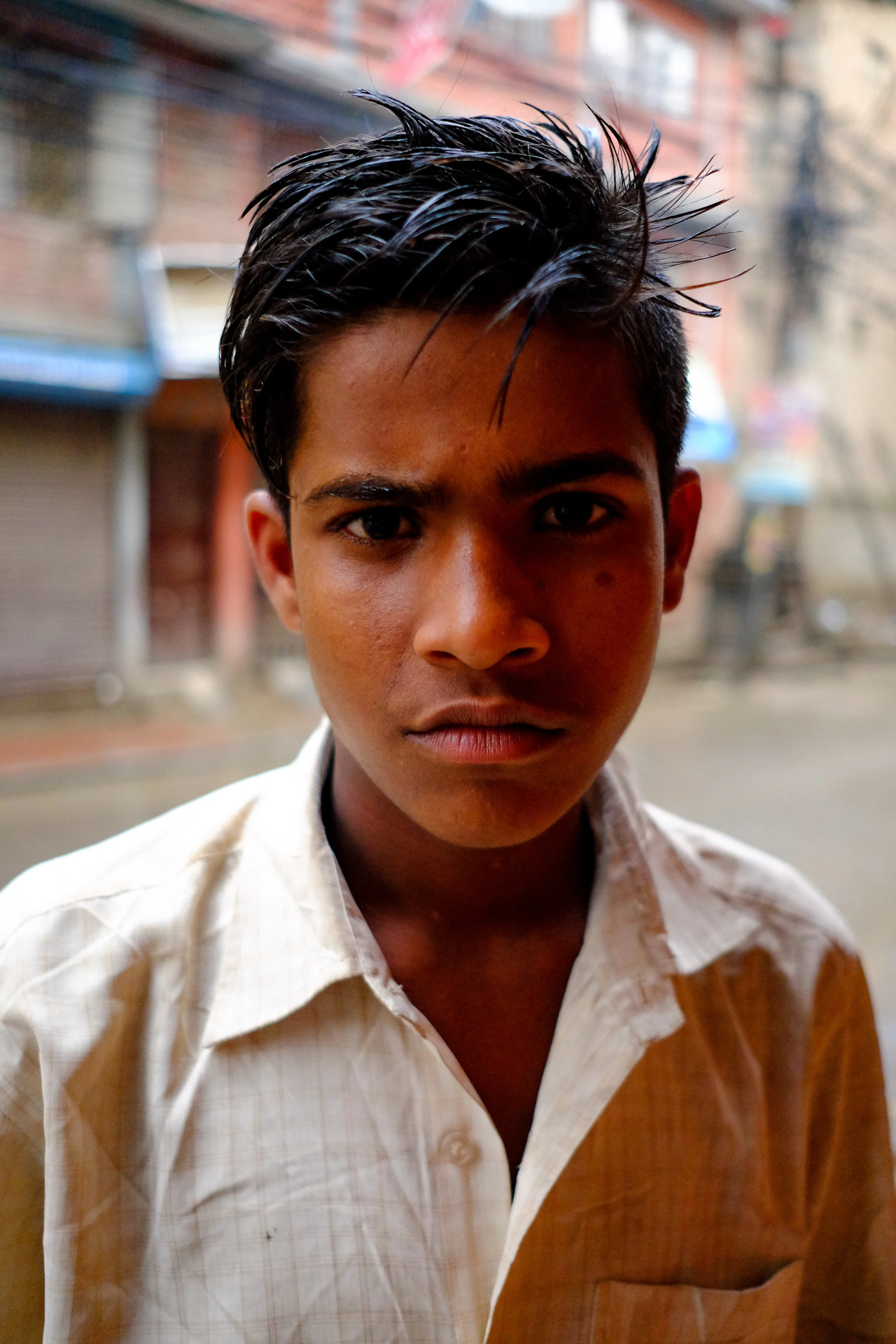
Being an Englishman used to getting caught out in the wet I tried to brave the storm but had to take shelter under the roof of a shop half way to my destination after getting drenched.
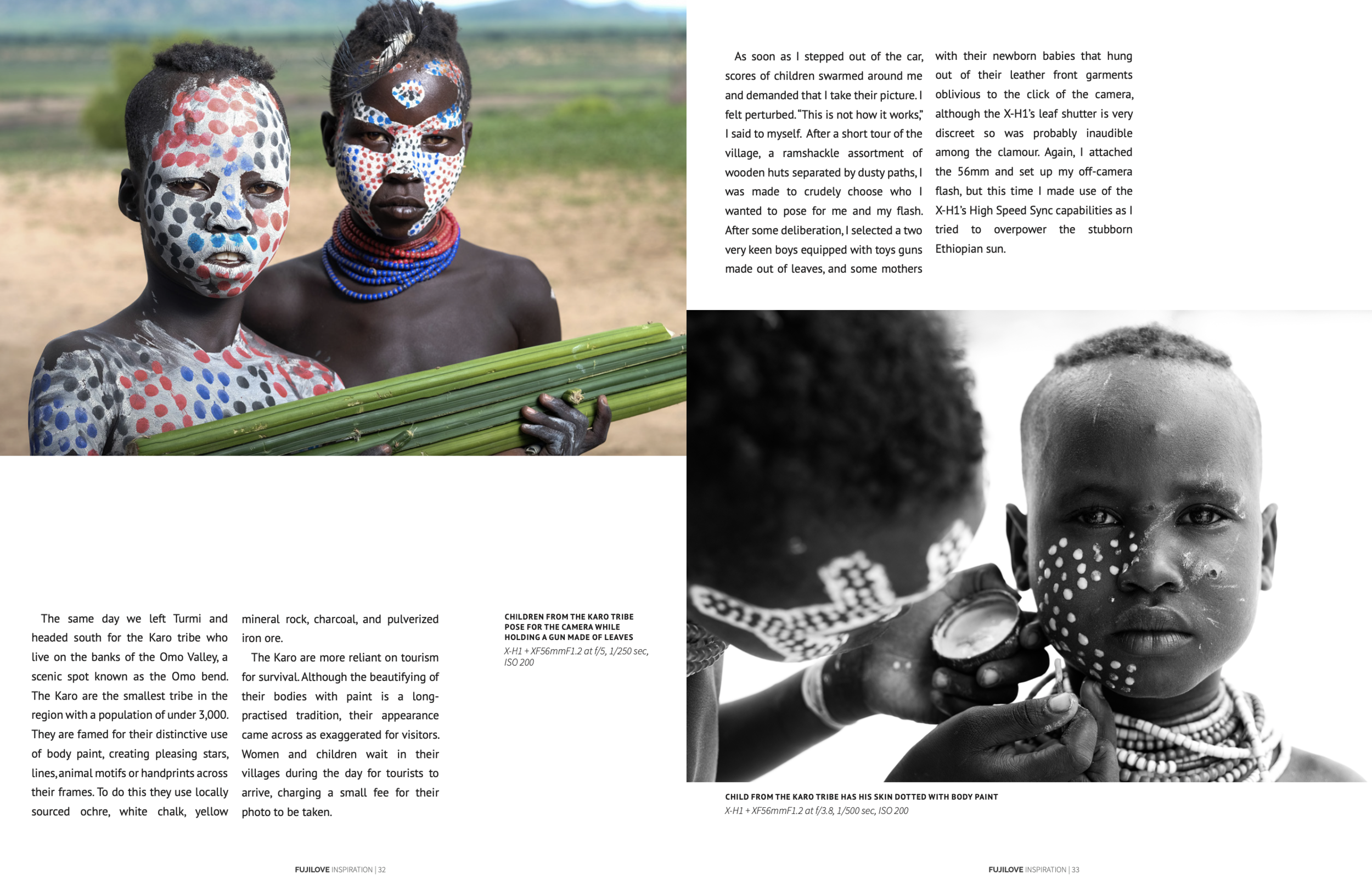
After around five minutes of watching the rain flood the many pot holes in the road and scooters nosily hurtling passed, two youngsters who sell balloons in Asan Tole sprinted for cover. We struck up a conversation and one agreed to have his photo taken. His serious expression and gloomy background made for a interesting portrait.
A ‘must see’ location in Kathmandu is Pashupatinath Temple.
The most holy Hindu temple in Nepal lies on the Bagmati River and is where the deceased are cremated in the open as family, friends and people on a day out watch on.
Bodies arrive at the temple through the day and evening. After the cadavers are unwrapped from the orange sheets that cover them, their feet are dipped in the river and water from the holy river is placed in their mouths.
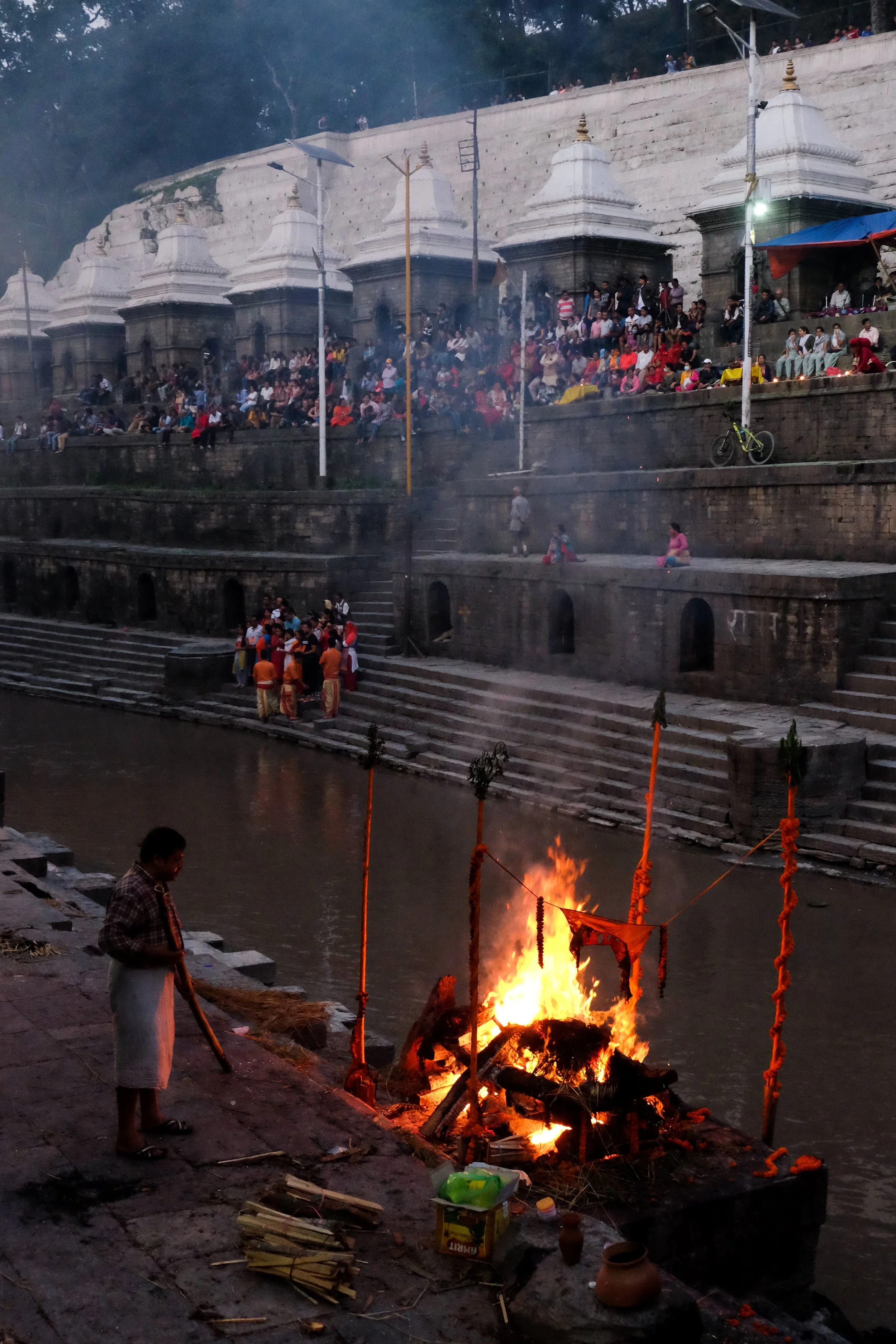
Priests chant before the deceased are placed on wooden stalls and set alight. Smoke from the numerous cremations taking place at the same time envelopes the area and smell of burning flesh taints the air.
Monkeys patrol the buildings across the river, looking for scraps of food on the floor or in the hands of visitors to the holy site.
I regard myself as a relatively well travelled man but I had never seen anything quite like this.
Photography is only allowed in some quarters of the temple out of respect for the grieving families and the dead, and yet it still okay to walk around with your camera on show.
Babas encourage you to take their photograph and, while standing from afar you can capture undertakers prodding the burning corpses. Should you decide to walk up to a body you may be able to see blistering body parts and, after the flesh has been burned bones sticking out, as I did.
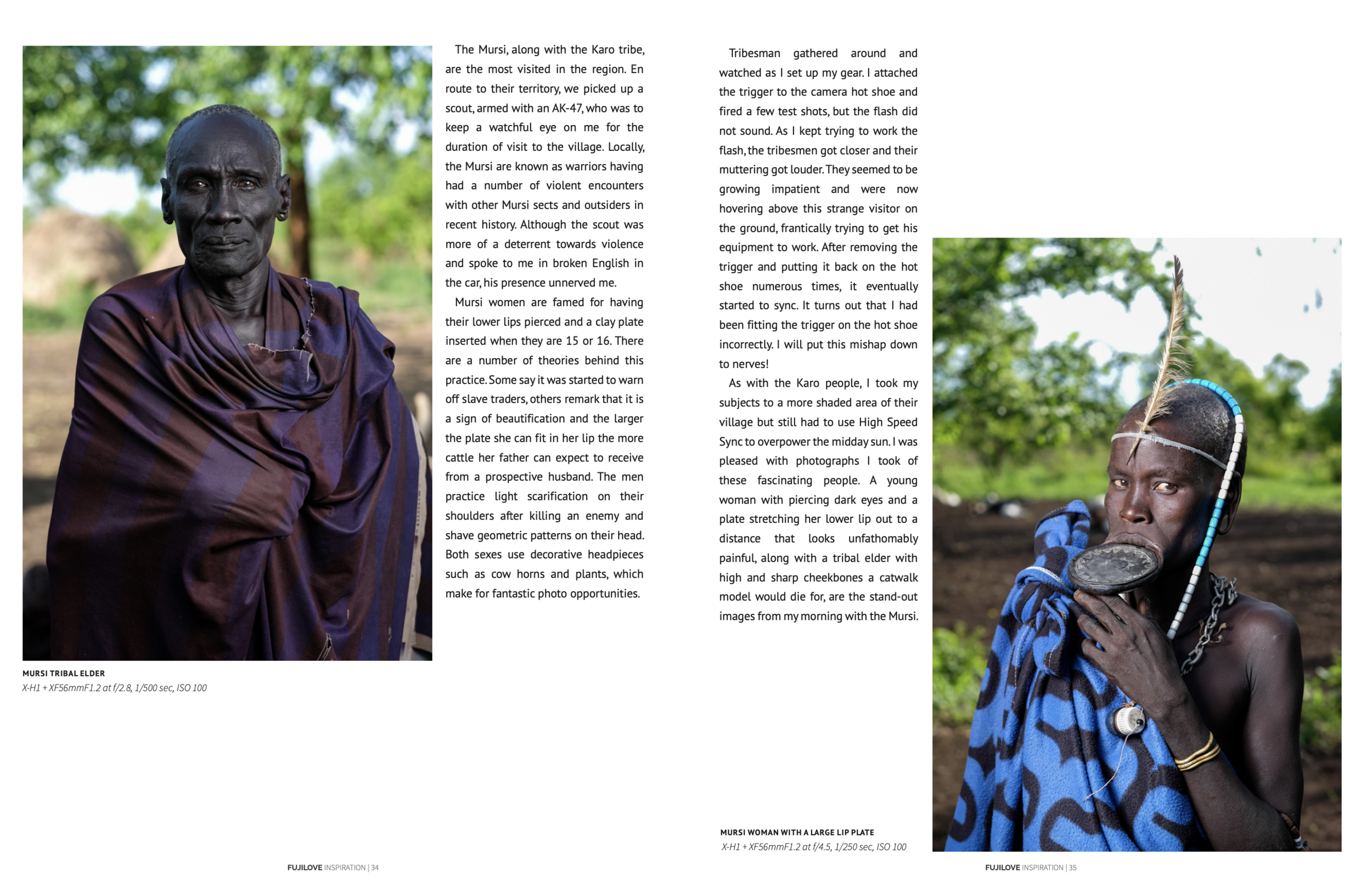
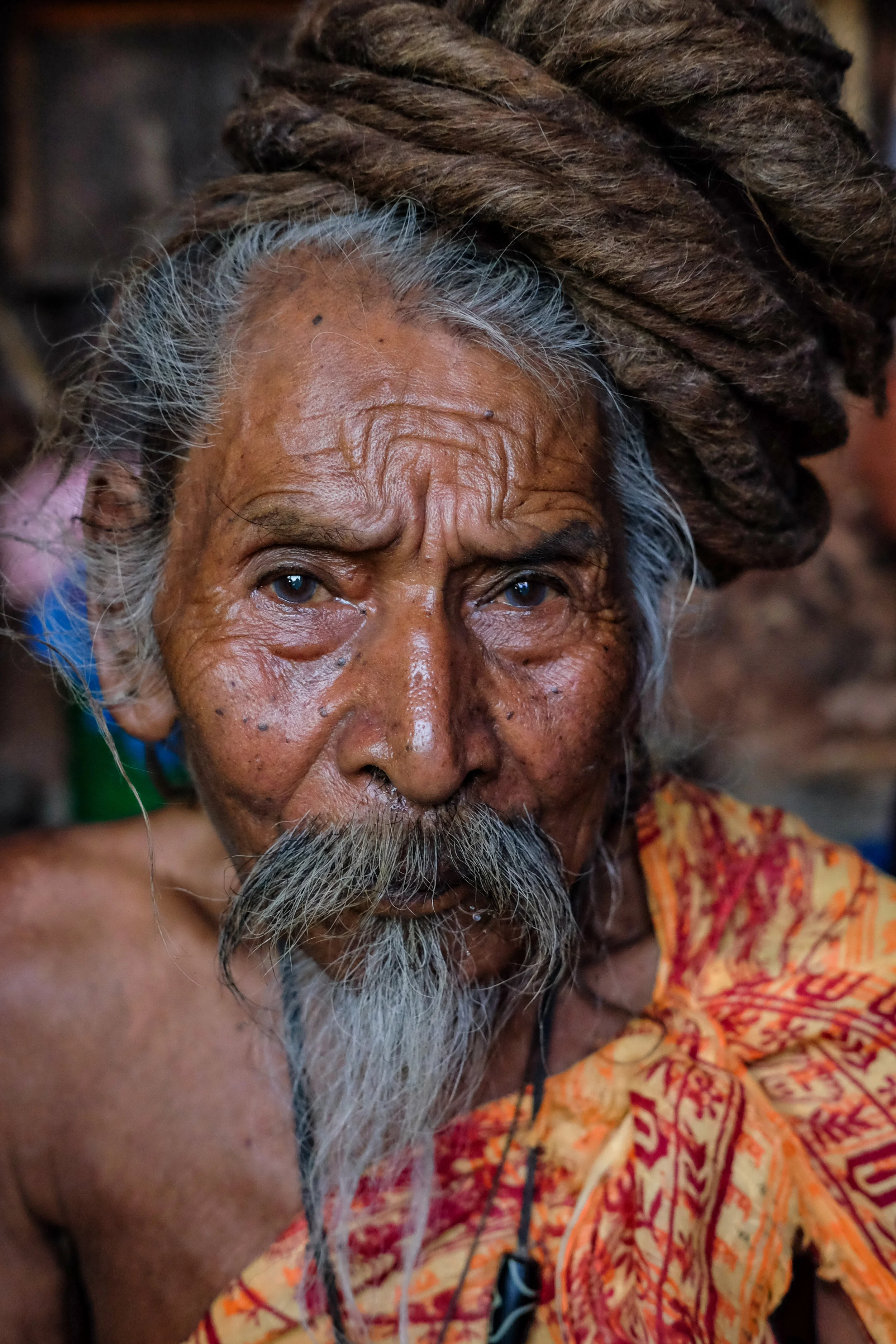
The most interesting Baba I photographed at Pashupatinath Temple was resting in a courtyard away from the river. With a long beard, long platted hair taken to one side of his head and a walking stick I had to take his picture. As the sun had all but set I shone the light from my iPhone on the side of his face to illuminate his evocotive features.
Another a famous landmark that comes with my strong recommendation is the Boudhanath, located around 7 miles from the centre of Kathmandu.
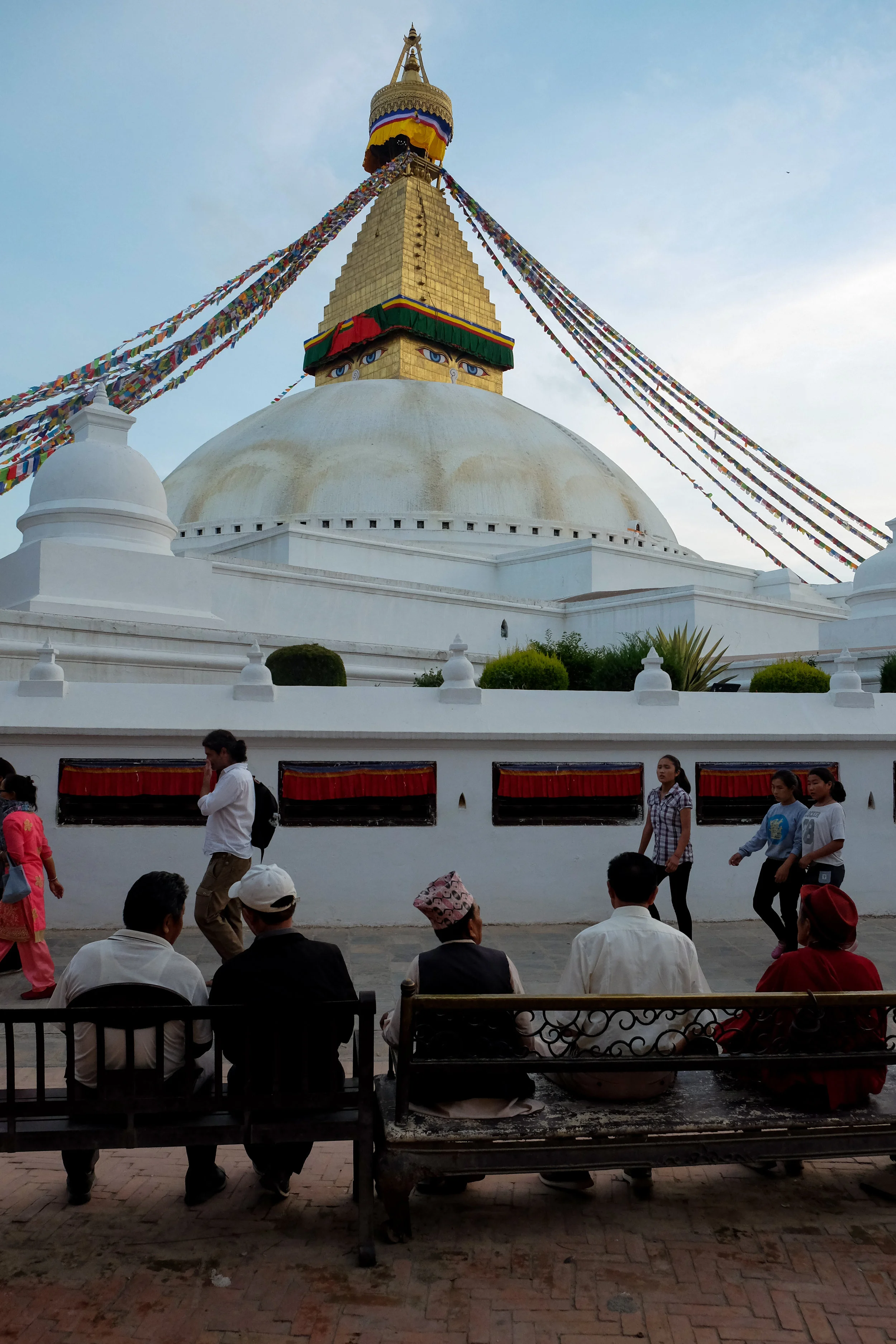
The Buddhist stupa, one of the largest in the world, dominates the skyline and its image is one rather synonymous with Kathmandu. The influx of large populations of refugees from Tibet has seen the construction of over 50 gompas (Tibetan convents) around Boudha.
Pilgrims scan their hands across the prayer wheels on the outside of the temple while others chat among themselves at the monument as though they were at a social gathering. If it wasn't for the Mount Everest looming far in the distance the Stupa may have been considered the country's centrepiece with its four sets of eyes following your very step as you walk by.
As the crowds dispersed in the evening the lack of light provided photographic challenges but also created unexpected opportunity.
A lady who was selling candles by the side of Stupa was illuminated by the yellowy tones, making for dynamic light and subject matter that probably wouldn't have worked in the unforgiving Nepalese sun.

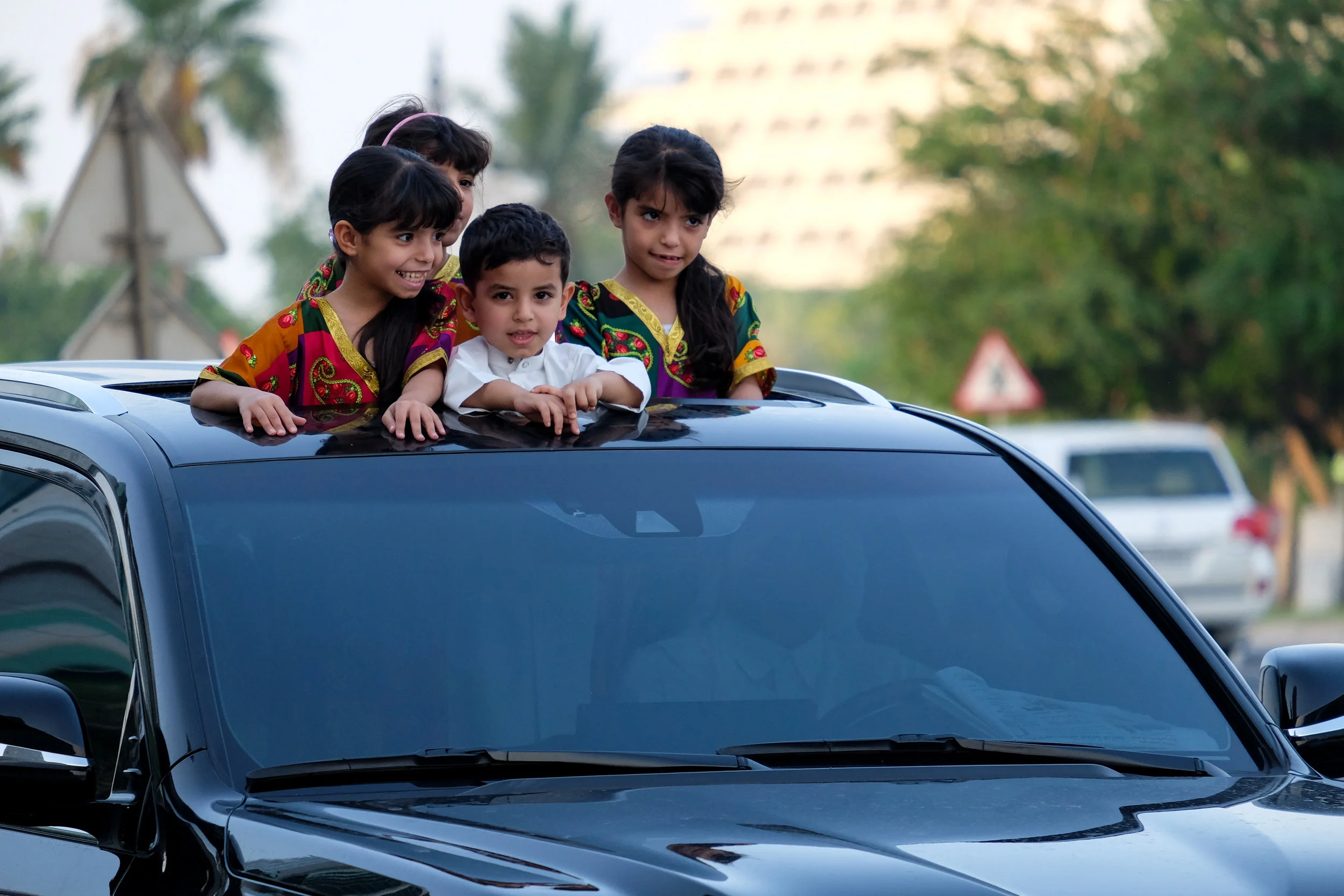
Doha Ramadan Car Parade
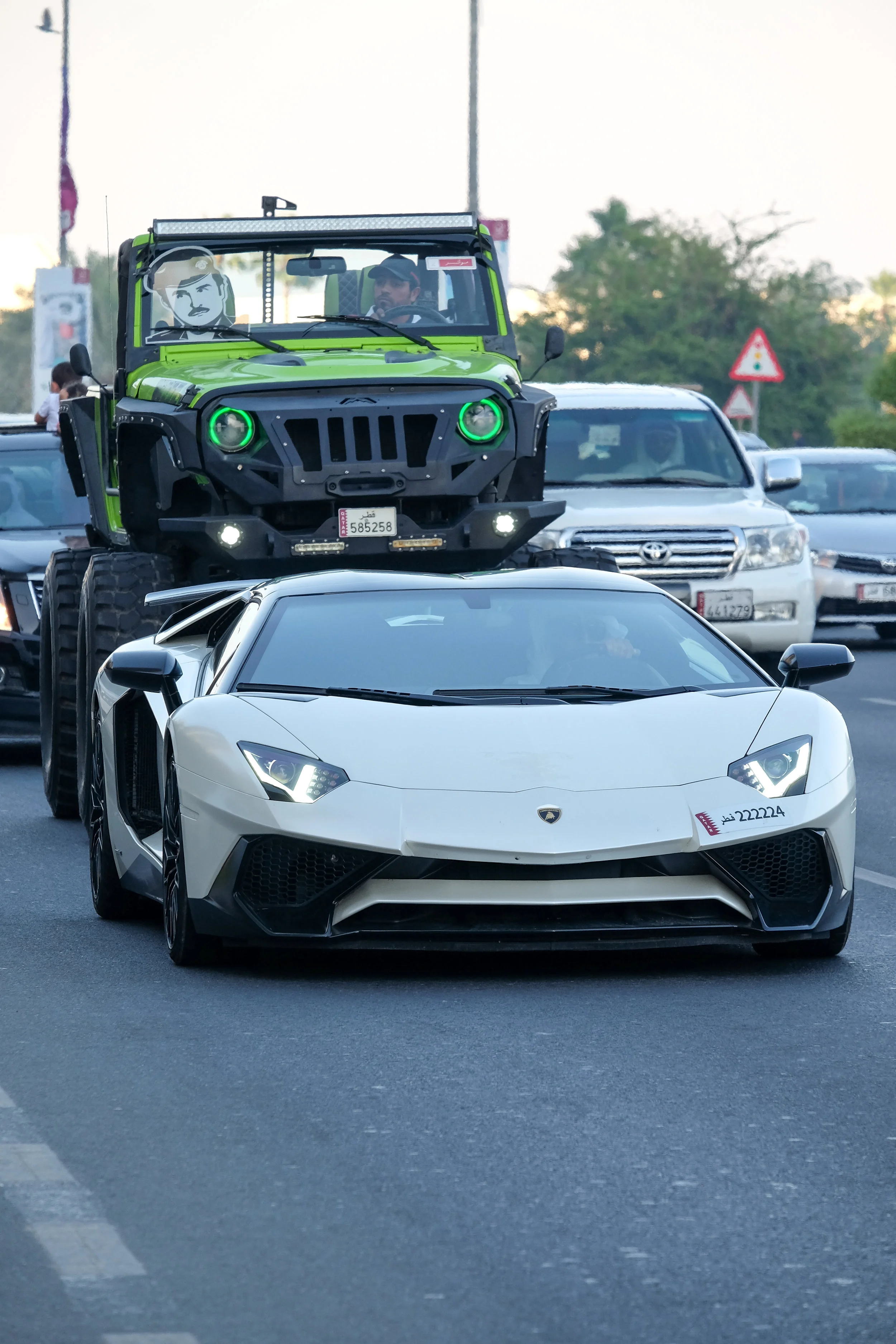
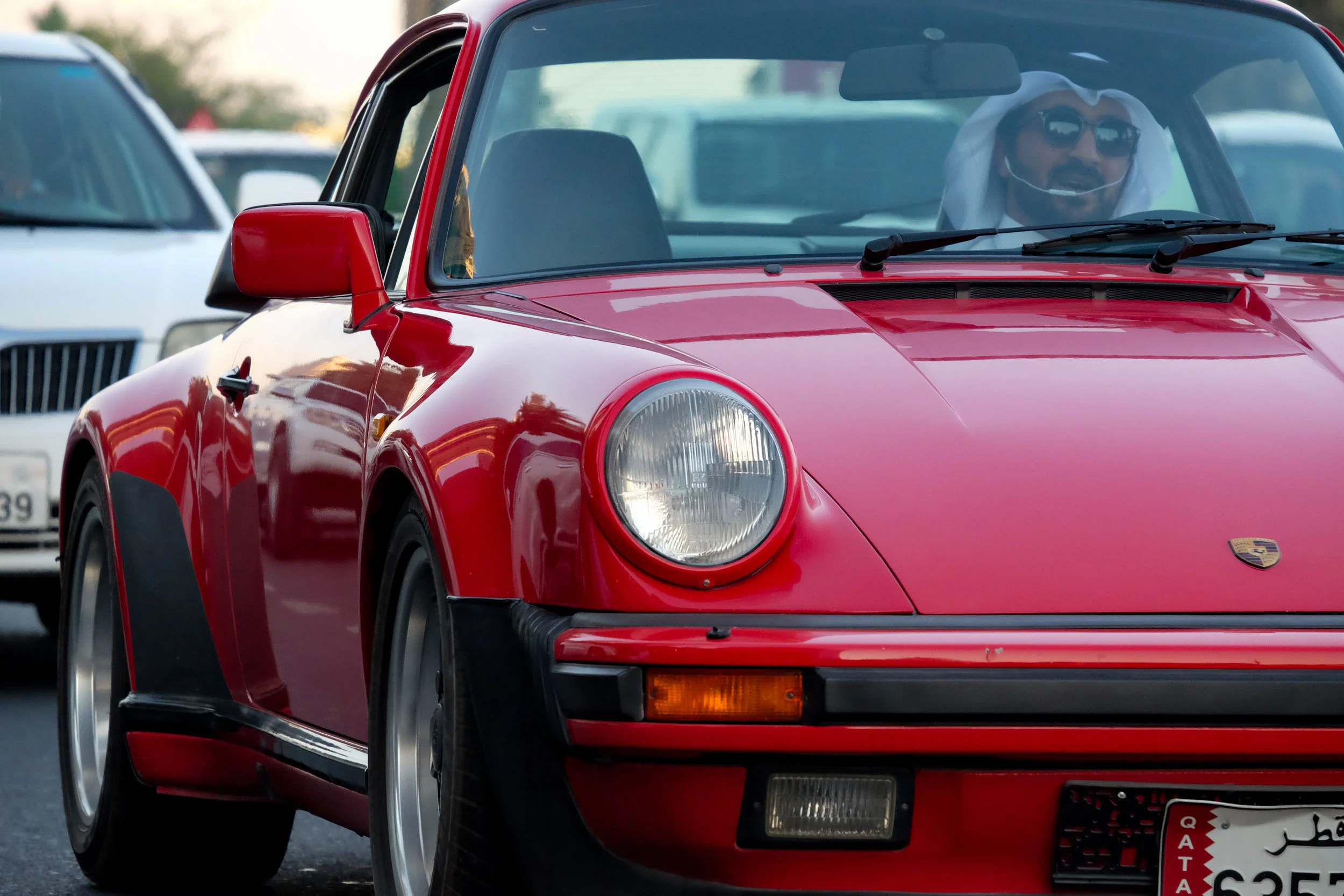
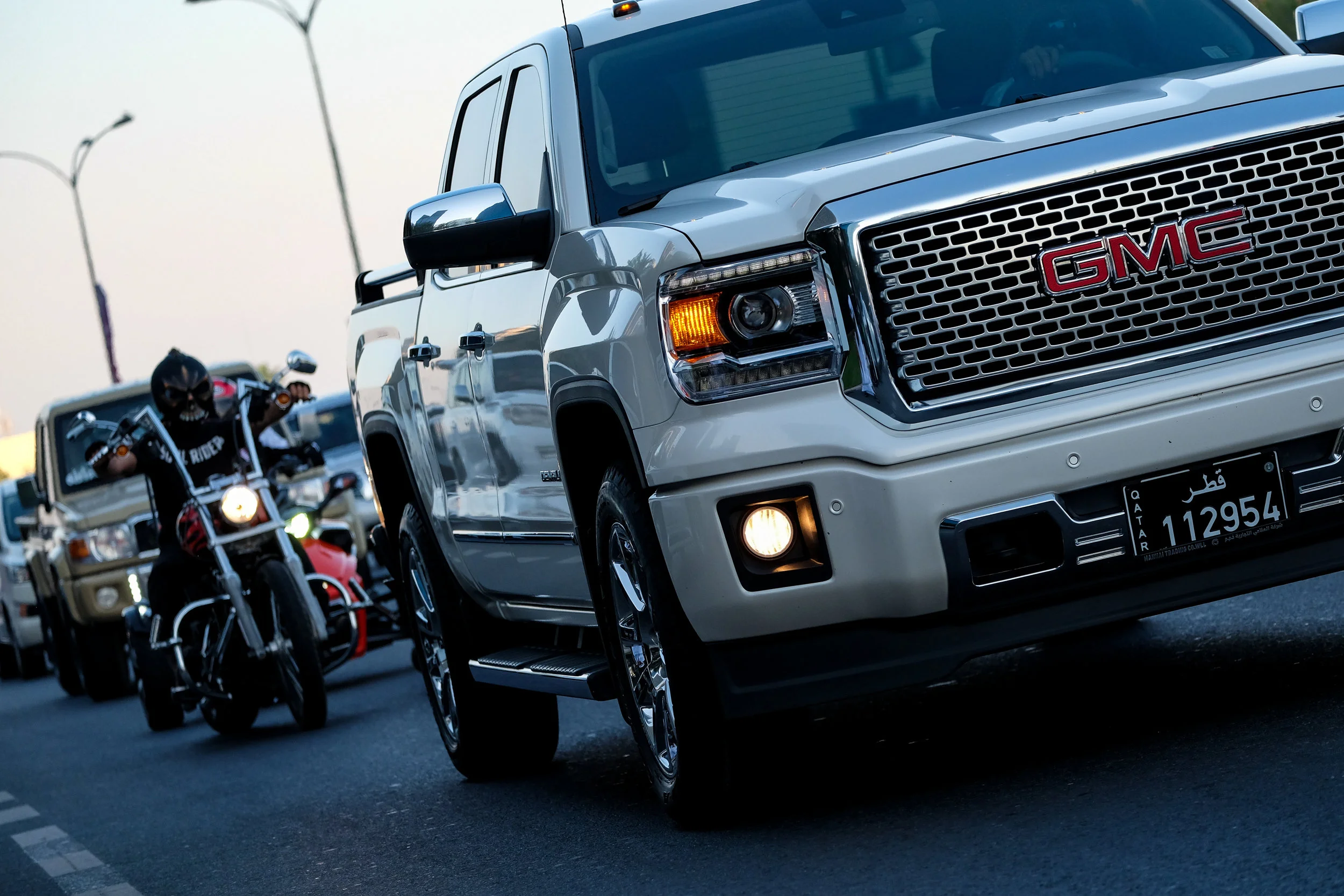
For the month of Ramadan, everyday before Maghreb prayers, an array of cars from the classically brilliant to the downright ridiculous parade down Doha's corniche.
Standing on the side of the road you can take in the eclectic mix of vehicles slowly edging down the strip from around 4pm to 6pm, the last few hours before sunset.
Children hang out of the windows waving at passersby and some drivers encourage you to take their photo to flaunt their wealth or just to show off their highly customised cars.
The unique spectacle makes for interesting photo opportunities with the array of characters on show, especially the excited children feeling the cool breeze in their sails as they perch on the window edges or peak through the sun roof.
I experimented by snapping the cars at different angles and captured moving pans as they flashed past.
Fujifilm Gallery of the Week May 25 2018 Nomination
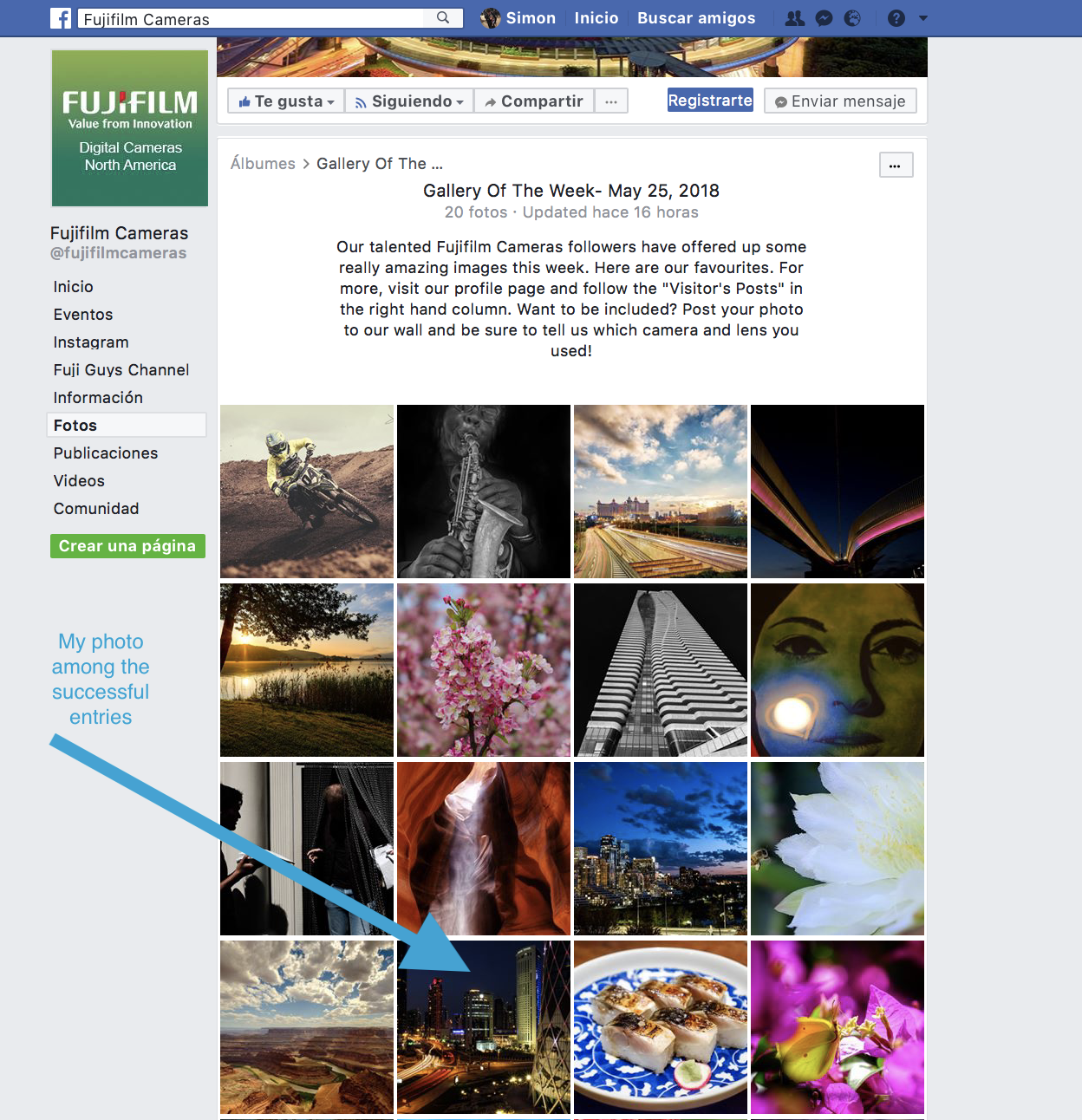
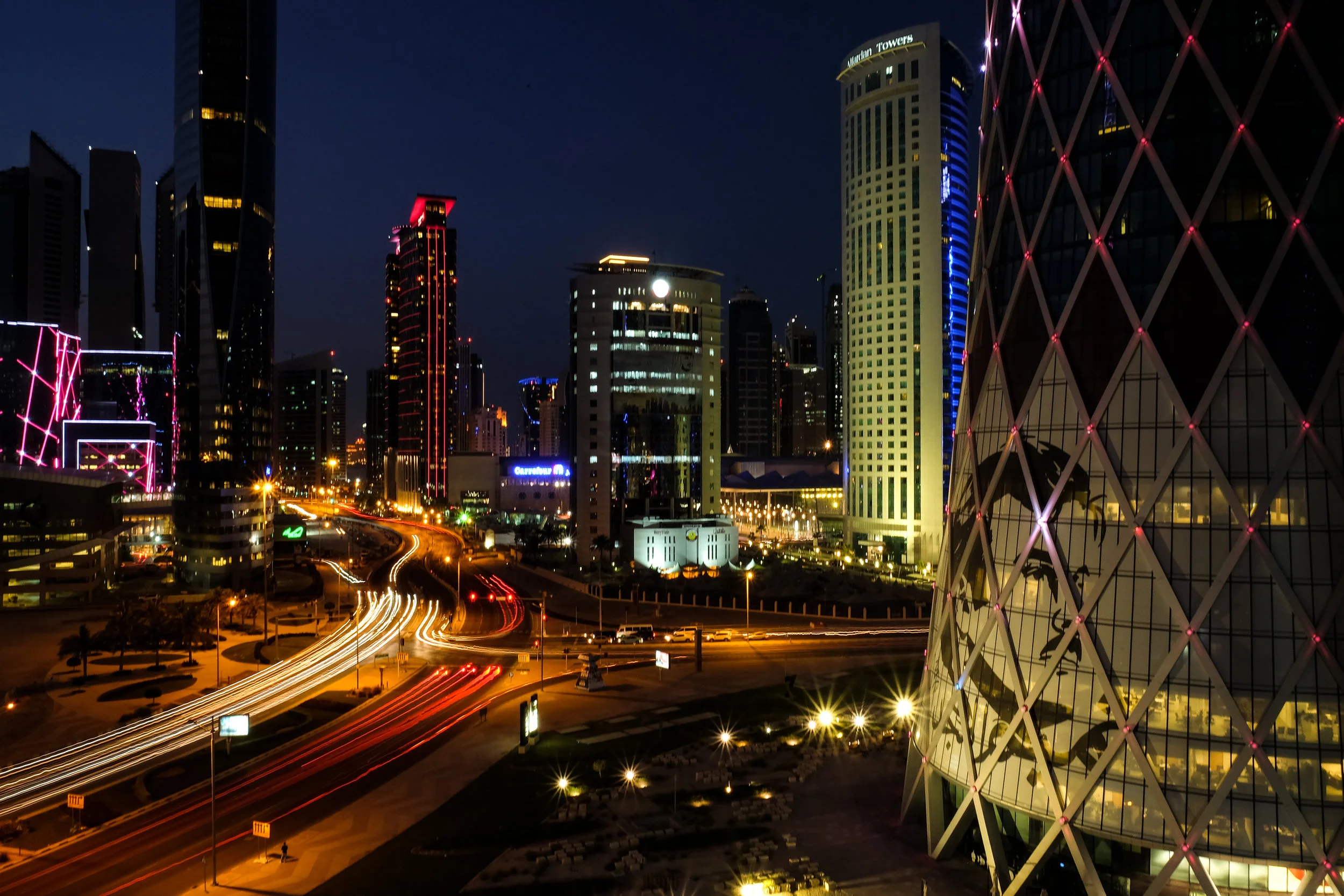
My night landscape photo of Doha was named in Fujifilm's 'Gallery of the week.' The picture was reposted to Fujifilm's official Facebook page with 19 other selected images that were taken with one of the company's cameras.
The snap is from the eighth floor of the Monopix car park in West Bay at a slow shutter speed. It shows traffic caught as light streams and a handful of the capital's skyscrapers, which flash with colour after the sun sets.
As far as I know, it is the second time I've been part of Fujifilm's photos of the week. The other winning image was long exposure taken of Doha's skyline from the Museum of Islamic Art in in January 2018.
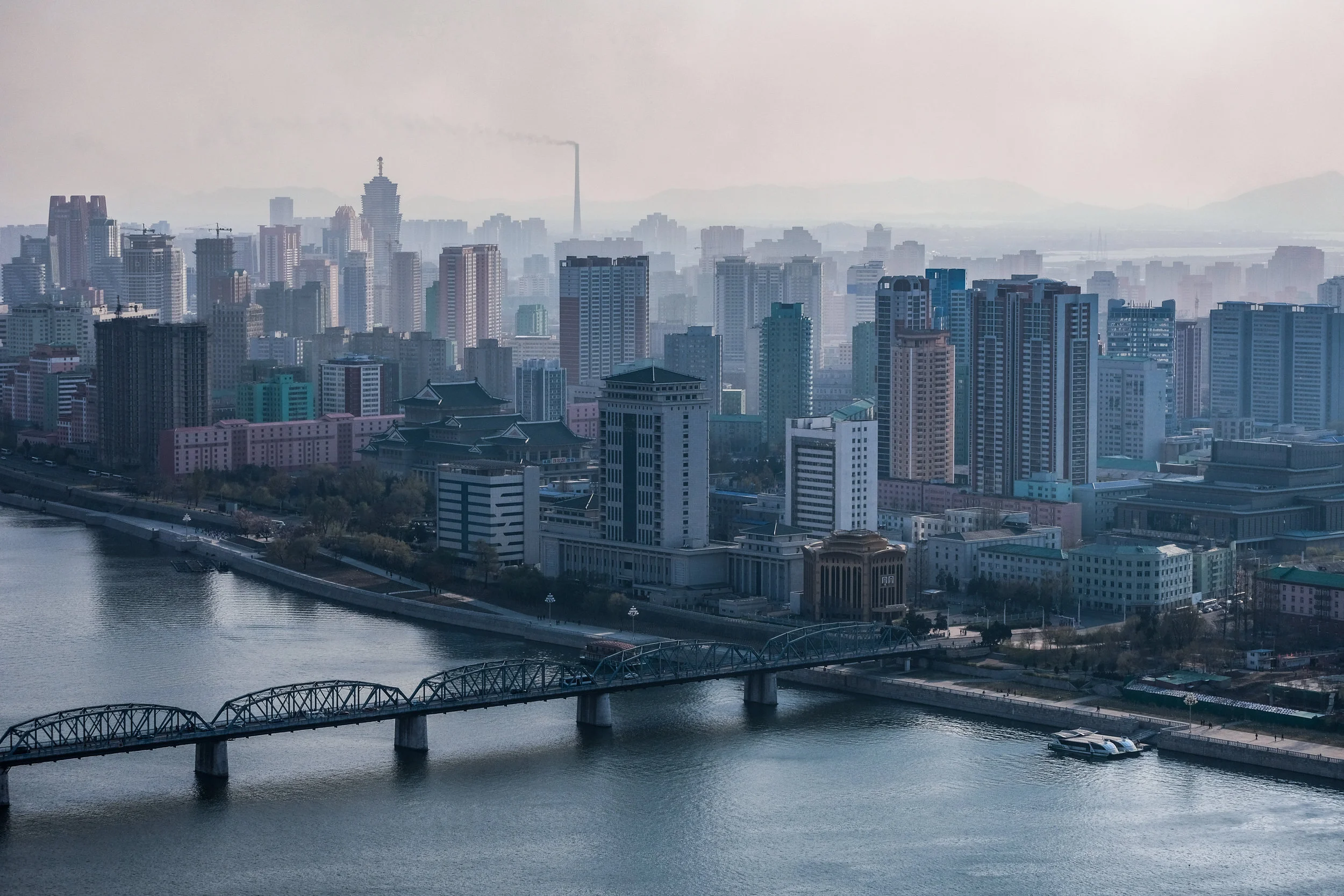
North Korea: The moments that sent shivers down my spine
Most touristic trips to the Democratic People's Republic of Korea, more commonly known as North Korea, are trouble free.
Tour companies only have access to a select few places meaning the majority of excursions to the reclusive state are very similar, varying only in length and the amount of sites you can fit in your jaunt.
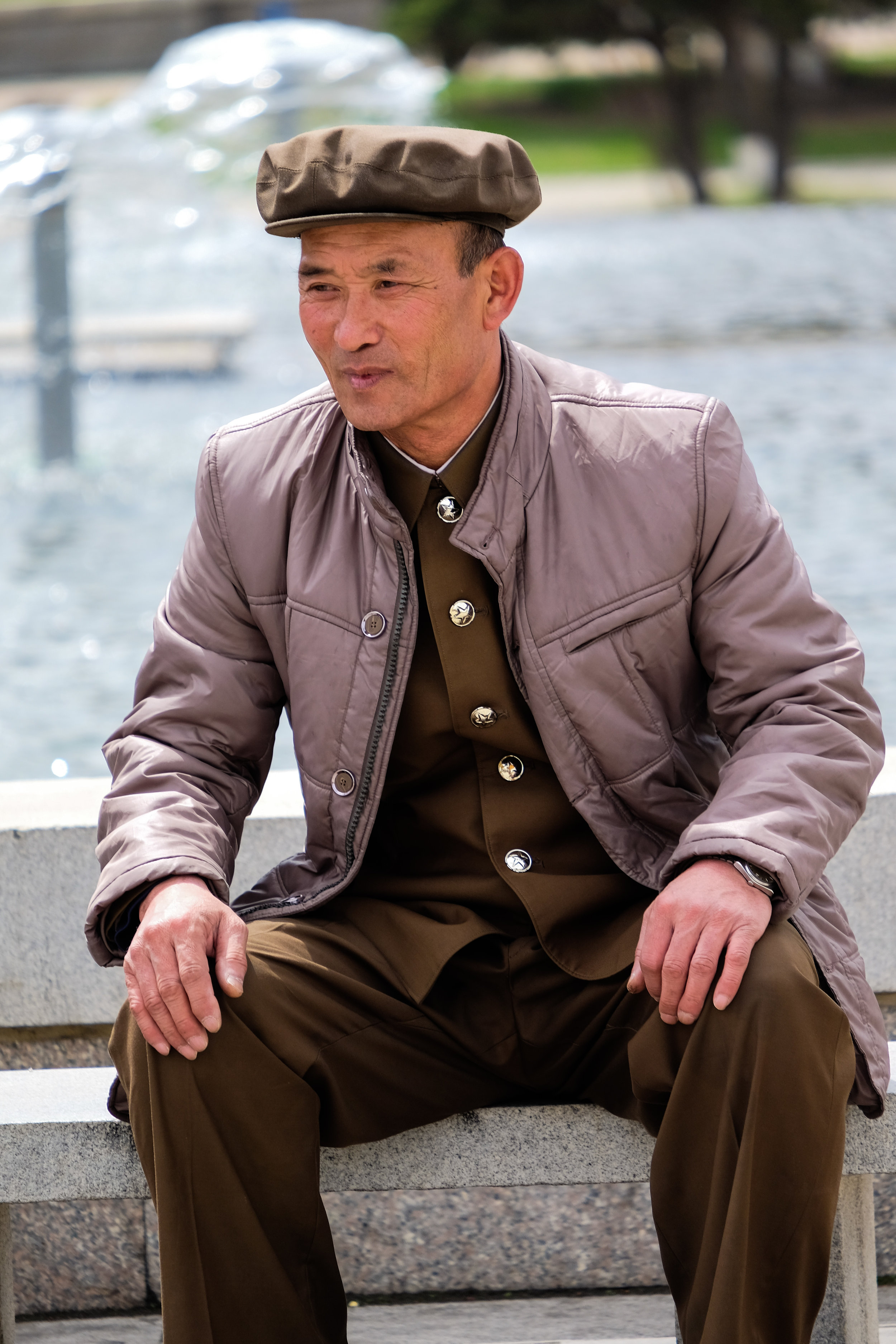
Depending on the time of year, visitors may manage to squeeze in annual events such as the fireworks display to celebrate Day of the Sun, the Pyongyang marathon and the world famous Mass Games, in addition to the usual attractions.
Most of the restaurants you dine in are 'foreigner only' too, although you can arrange to go to a few hand picked options, such as Ryung Song Pizza, where Koreans diners may be present.
Despite watching North Korea from the comfort of the bus for much of the visit, akin to going on an African safari, things do go wrong. The death of American tourist Otto Warmbier is the very worst of what could happen to a visitor. The former's case, although tragic, was extreme, unprecedented and undoubtedly spurred by his nationality.
Punishments for foreigners guilty of gross errors of judgement are usually softer than being sent home brain dead or 15 years hard labour in a prison camp.
I was told by my British tour guide that one client on a previous trip had surreptitiously attached a GoPro camera to the back of the tour bus and took photos from his seat, using his phone and its Bluetooth connection.
A civilian noticed the odd camera on the bus as it was swooping around the pot-holed streets of Pyongyang and reported its presence.
The matter was handed over to the police and the offender tracked to his hotel. After a meeting with officers he was forced to apologise to the Korean people and their leaders by way of a self criticism letter that listed how he could better himself going forward.
I assume he was ordered to delete the images captured too.
Those who travel with a respectable tour company will have briefing a day before departure where the dos, don'ts and consequences of not following the rules are explained. Although well versed in Korean societal norms, I learned in the meeting that you must not fold images of the Great Leaders, among other essential snippets of information.
And yet, I still got 'told off' before I arrived in Pyongyang.
The English newspaper of the D.P.R.K., the Pyongyang Times, always features a photograph of Kim-Jong un on the front cover. Suffice to say I made sure I folded beneath his image, not to cut his body in half as I was given a copy and took my seat on the Air Koryo flight to Pyongyang.
However, there was still time to feel the breath of the Korean government clawing against my back, even before we had taken off and were on Chinese soil.
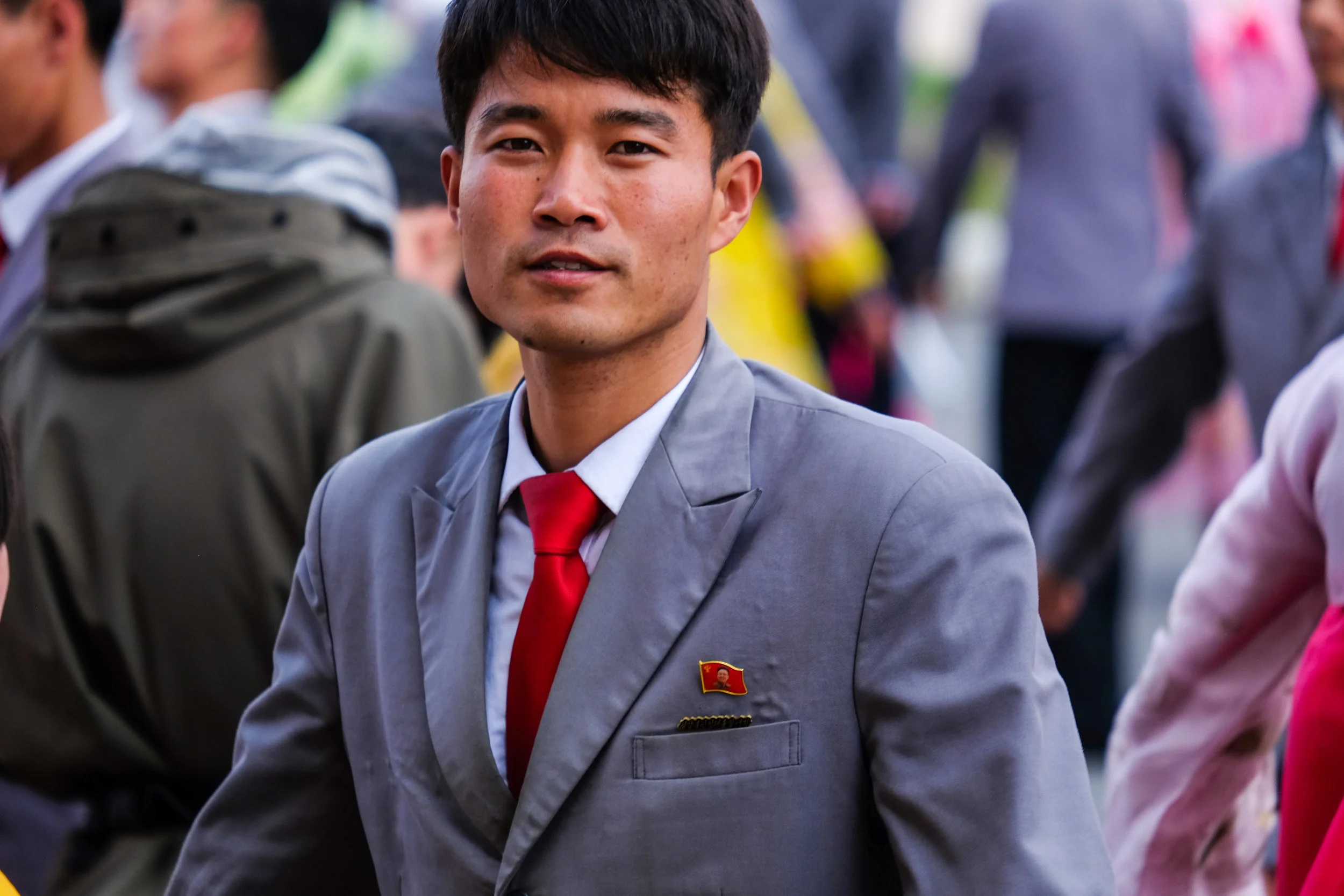
Looking radiant in their navy blue uniforms, topped with flawless white skin and beautiful big eyes I couldn't resist trying to capture one of the cabin crew members with my iPhone.
As I was on the isle seat I poked my head over my shoulder and saw the coast was clear and started snapping at the young lady seeing to customer a few rows in front. Literature I had read a few days before suggested photographing was banned on board but with the plane not in the D.P.R.K. I decided to try my luck.
Moments later there was a tap on my shoulder and soft voice in my ear said: "Delete the photos now please."
I turned around to see one of the cabin crew girls. My heart sank, with fear and not with love. She had caught me red handed.
I promptly deleted the handful of images I had taken of her colleague. She was only contented once all of them had gone, indicated when an unrelated photo from my gallery appeared on the screen.
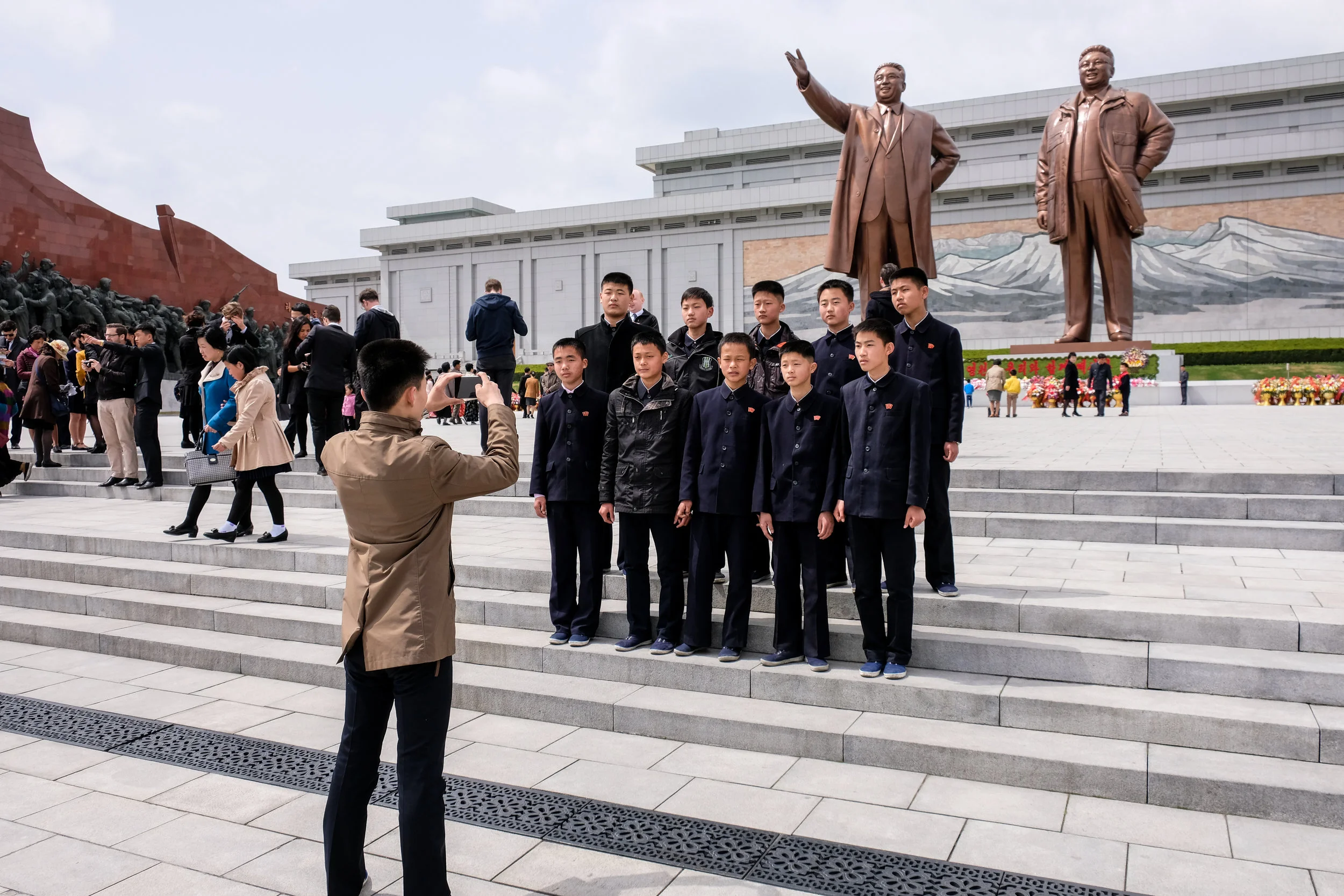
In the briefing before the tour we were also told to show our utmost respect while we visited the birth place of Kim Il-sung in the village of Mangyongdae, on the outskirts of Pyongyang.
As a designated exhibition guide showed us around the small row of huts where the first leader of the country was said to have been born I rested my feet on one of the rocks in the courtyard. A mistake.
Within a split second of my foot touching the smooth surface of the large rock I heard the screeches of my group's two Korean guides or minders behind me. Unaware I had done something wrong one told me to show more respect and to rest my foot some place else as there were guards around.
One of our group's minders, Mr Lee, actually apologised to me after the short scolding, a reassurance that I would probably come to no harm in North Korea. The small apology also shows that behind the Kim dynasty there are 23 million people who, unlike popular media portrayal, appear to be able see through such tedious rules.
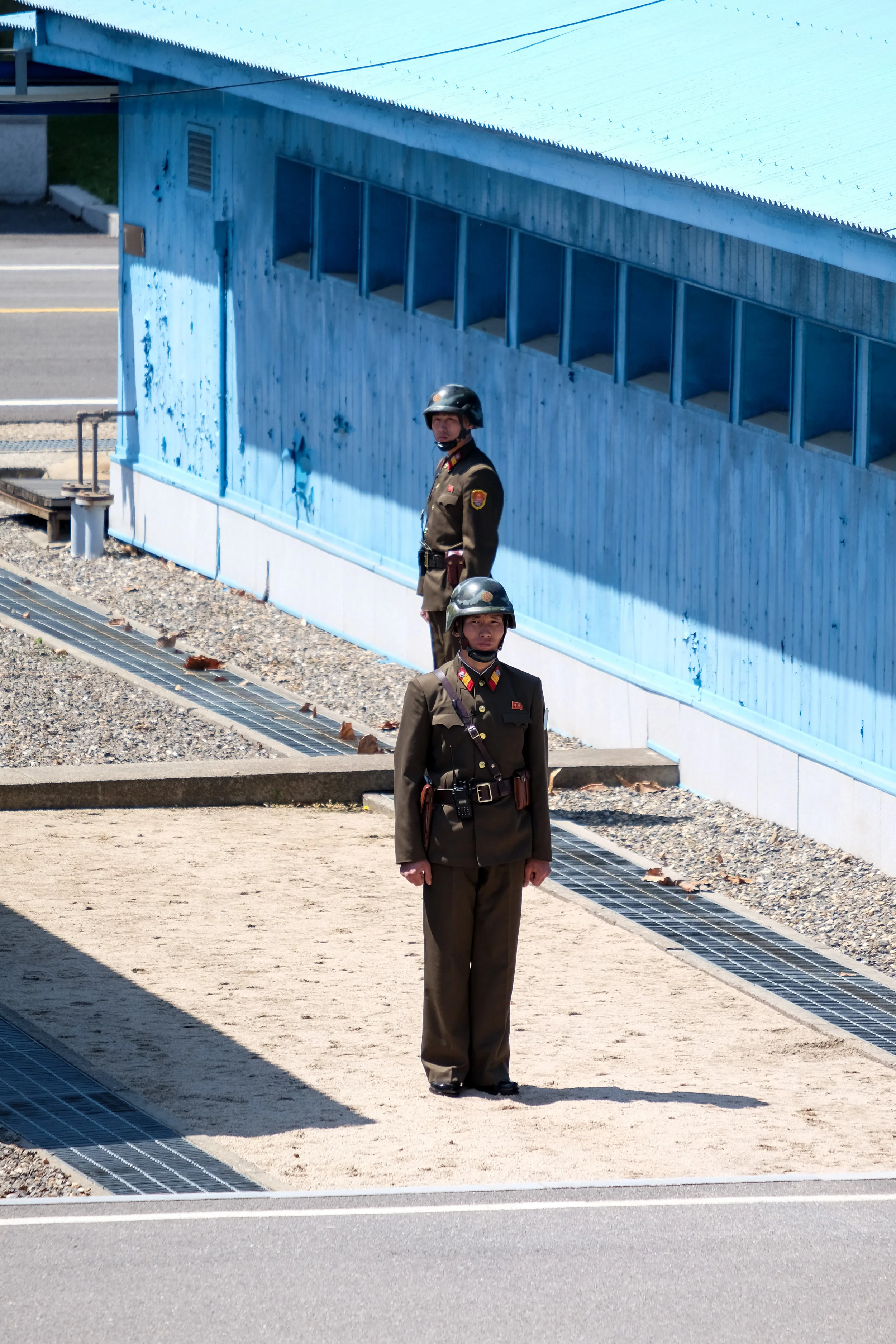
The same day the tour also made its way from Pyongyang to the DMZ, the Demiltrarized Zone, the strip of land that divides the two Koreas, one of the last vestiges of the Cold War.
President Bill Clinton once described the Joint Security Area at Panmunjeom, where talks between the two warring nations usually take place, as the 'scariest place' on earth.
The road from Pyongyang to Panmunjeom is bumpy and flanked by fields where you can see ox and cart ploughing the crops. Military checkpoints where soldiers call on your Korean guide to exit the bus for a short conversation and paper checking are also littered across the stretch.
I went just a few weeks before Kim Jong-un met the South Korean president, Moon Jae-in at Panmunjeom for the first meeting between the country's two rulers on the south side. In preparation for the leader's visit and consequent use of the roads, uniformed workers and people dressed in civilian clothes, including women, could be seen smoothing out the many crevices in the asphalt.
When the bus passed one set of workers mixing cement and applying the sticky melting substance to the ground I snapped a picture. As the bus stumbled its way forward the Koreans stopped their work and all stared at me hanging out of the window at the back and pointing my camera in their direction.
At the next military check point we were stopped for longer than normal.
The British woman sitting next to me calmly said: "All those workers stared at you as you took a photo. I think the solider will be making a visit to the bus in a minute to get that picture deleted."
My heart skipped a beat. I turned my camera off and looked to the floor.
I asked myself: 'Surely the workers don't have the means to contact this specific checkpoint and report me?And why would they even care?'
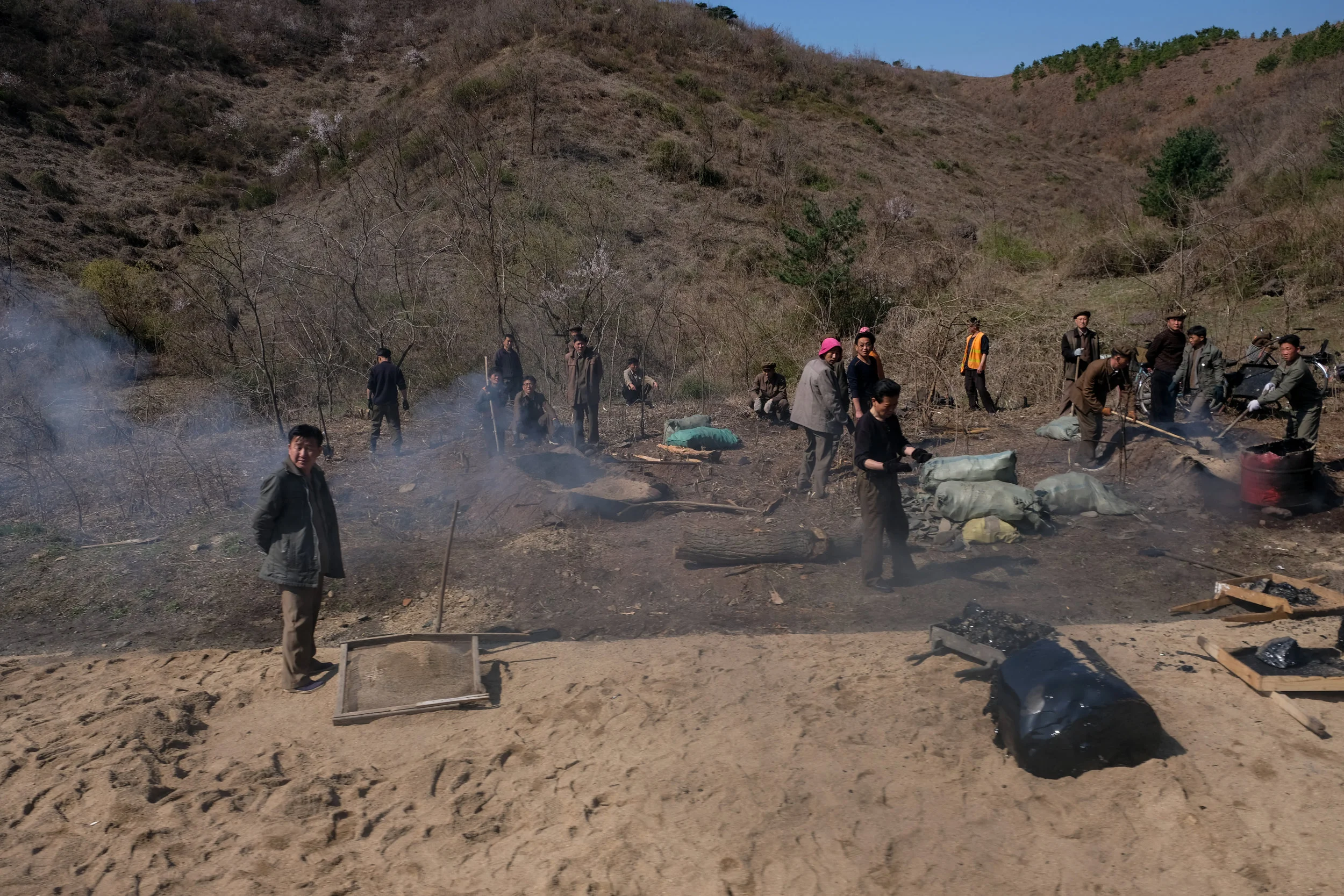
After a few minutes the bus set off again, I had avoided an unwanted confrontation with a soldier, and I decided to save my camera batteries for later.
I think Bill Clinton was wrong, the military checkpoints and large hill drops on the road were far scarier than Panmunjeom.
The journey back to Pyongyang also had a few hair raising moments but the worst was behind me. I had been ill for the duration of the trip thus drank a lot of water. Miles away from the only designated service station I asked my guide if I could pee on the side of the road.
After some deliberation he allowed me. The bus stopped at one of many leaden areas on the empty road and I found a large rock to relieve myself behind. The guide, a few feet in front, watched for oncoming traffic who would surely make a fuss of a foreigner urinating in an area he wasn't meant to. Fortunately no buses, cars or military vehicles passed in either direction for those few moments.
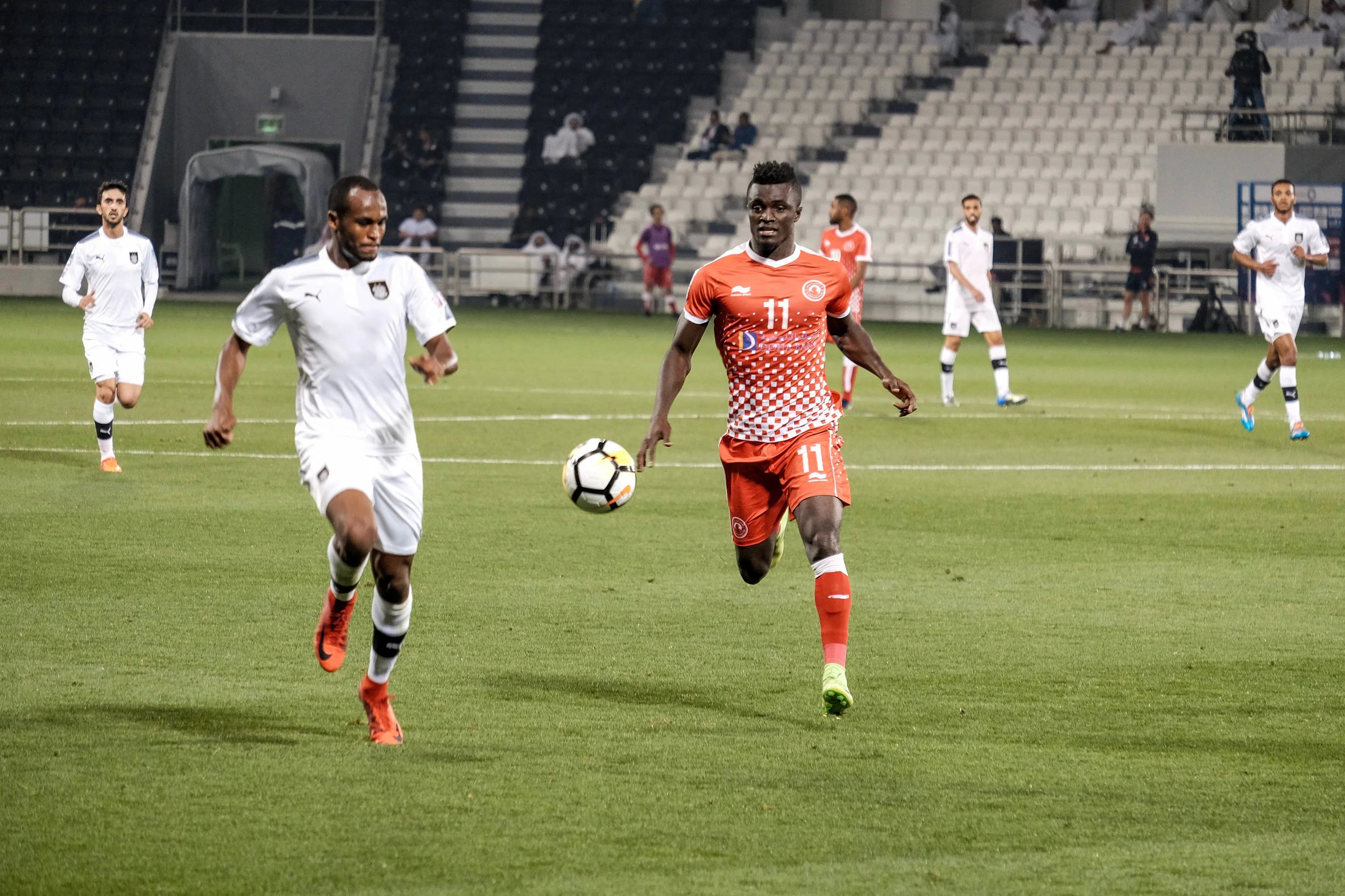
Action at the Jassim Bin Hamad Stadium.
Sports photography with a mirrorless 'street' camera? Not so mad but not ideal
I think it is safe to say I've pushed my Fujifilm XT1 to its limits. The little black box has been a trusty companion of mine on the streets of London, Havana and Hong Kong where it delivers with ease.
I've captured long exposures where its has rested on a tripod or something stable that happens to be lying around, accepting and smashing the tests I set, so to speak.
It has also accompanied me to extreme destinations such as North Korea where it didn't shirk at the danger whereas I sometimes decided not to shoot for my own well being.
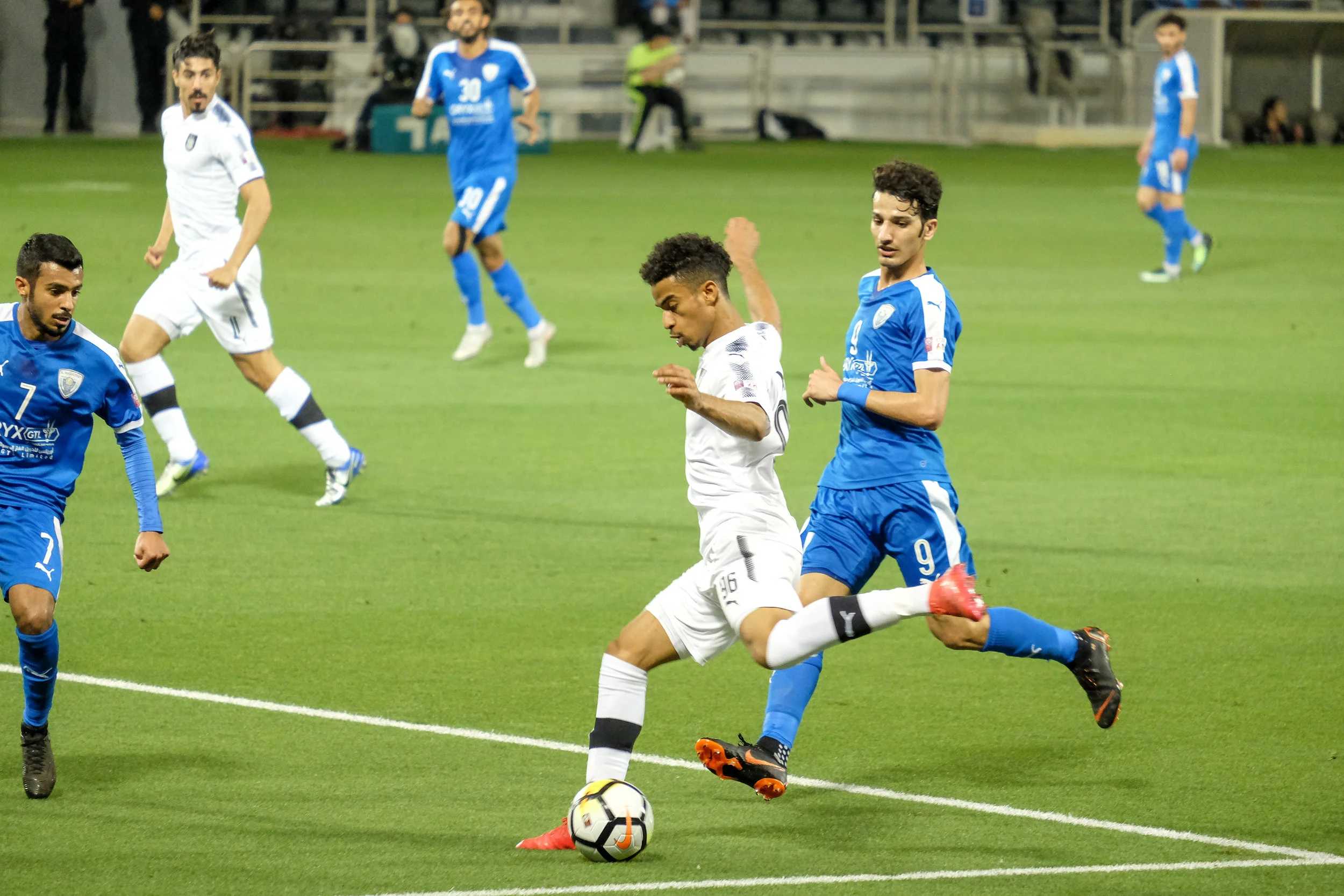
Qatar international Akram Afif bears down on goal during Al Sadd's demolition of Al Kharitiyath in April.
The Fuji has also been dropped on numerous occasions, sometimes by me, sometimes by others, and survived with some scratches and only one battle wound, a permanent scar; the battery slot sometimes won't shut.
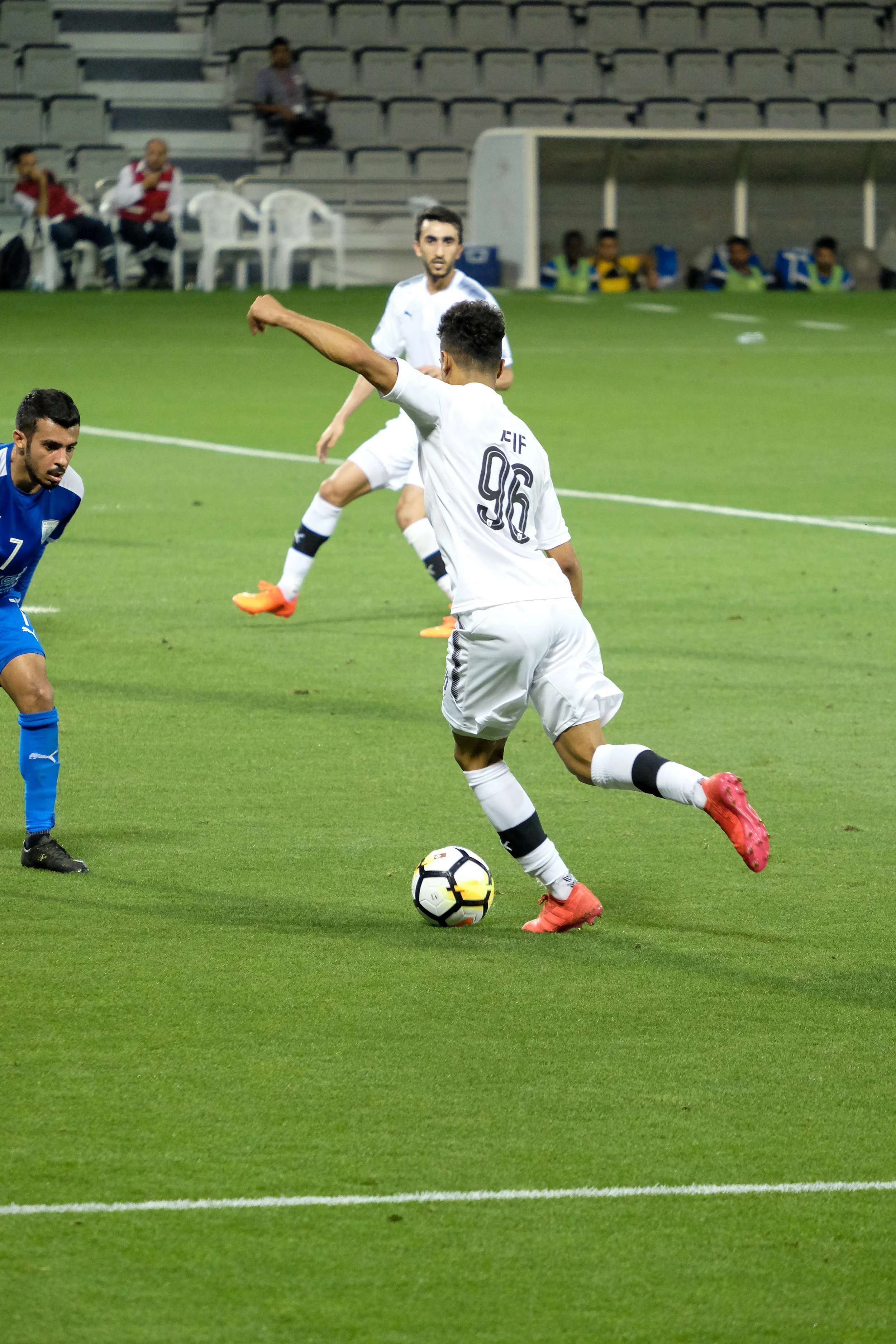
Afif dribbles into the box at the Jassim Bin Hamad Stadium.
Its survival through all this belies its diminutive size.
However, one issue I've had with the XT1 since I got it is its autofocus. Despite software updates it is still no match for a DSLR in this department and unlike its successors, the XT2 and XH1, it doesn't have customized focusing options. The newer Fujis can track fast moving and momentarily disappearing subjects such as animals and sportsmen if they become obscured.
Eager to make otherwise poor football more tolerable and to take the trendy looking tool out of its comfort zone I ventured to numerous Qatar Stars League football matches
Without a press pass I positioned myself on the front row of the stands, as close to sports photographers on the sidelines as possible. There might be some funny images around of photographers equipped with chunky DSLRs and 400mm lenses and a spectator in the background pointing in the same direction with a significantly smaller XT1 and the Fujinon 55-200mm.
To give myself the best chances of getting good shots I switched the front lever to 'Continuous' shooting and selected CL or CH (continuous low and high) on one of the dials. Of course, a fast shutter speed was selected and I used the biggest aperture possible to isolate my primary subject, the players.

A crunch tackle during during Al Sadd vs Al Kharitiyath.
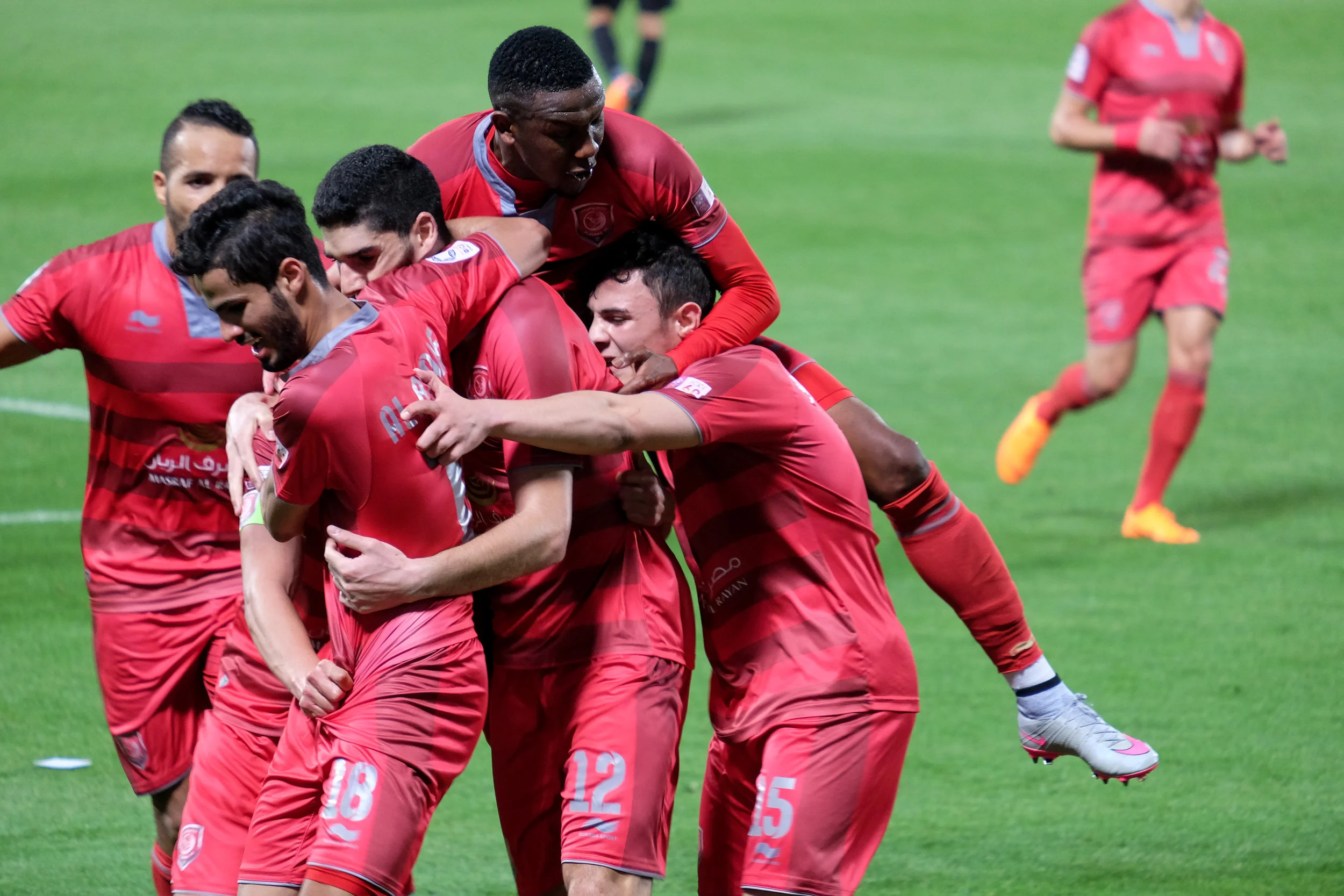
Eventual champions of the league, Al Duhail, celebrate a last gasp equaliser against nearest title challengers Al Sadd. The game finished 4-3 to Al Duhail.
If you place your focus point in a certain area of the frame and the action happens at the same point within the first focus, the players and ball will be clear. However, if in the likely event the players move out of those specific points the action won't be as sharp as it could be.
The camera, in my experience, cannot re-focus fast enough or without screen blackouts as you fire in the continuous shooting modes.
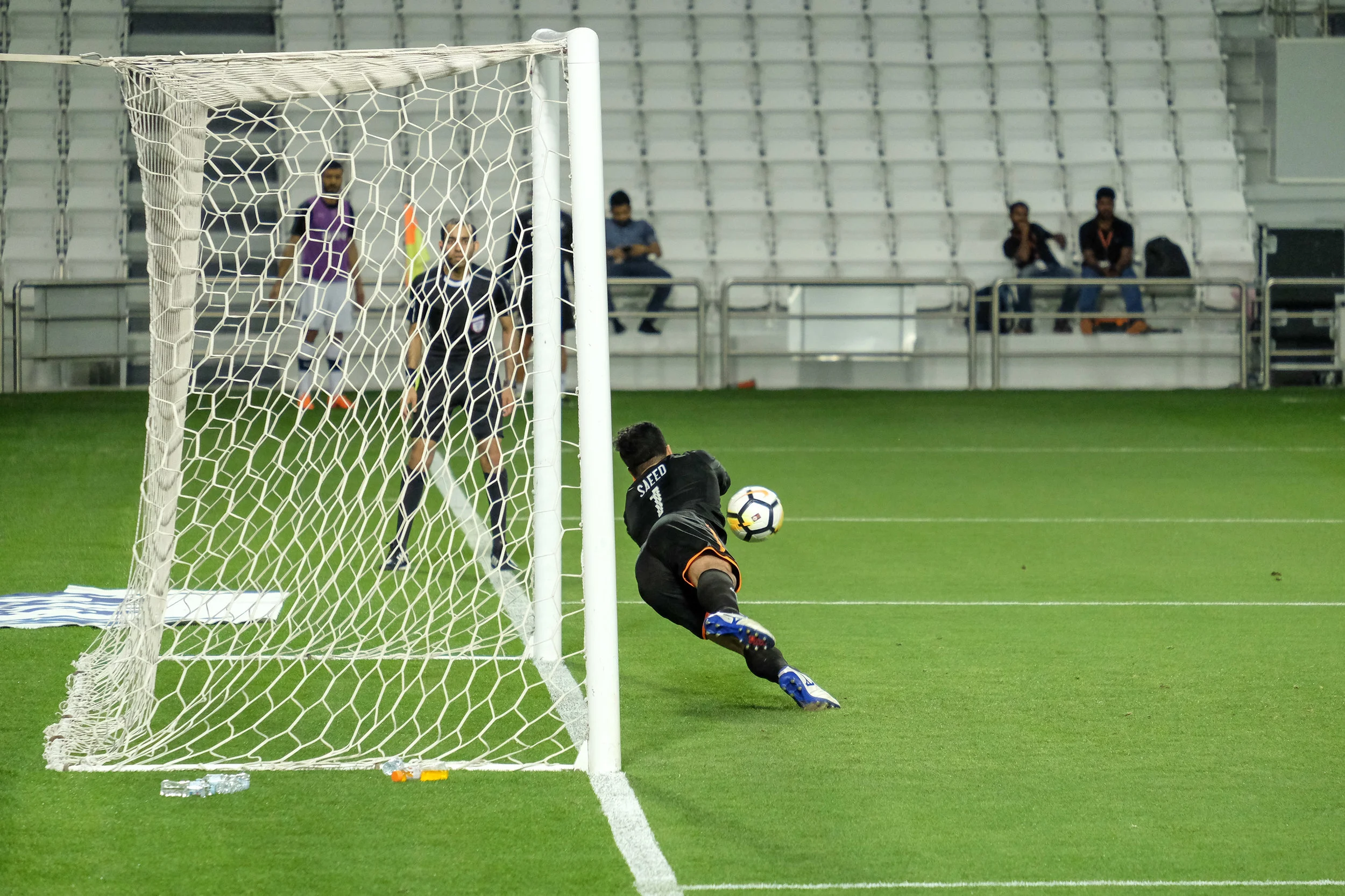
A rare Al Sadd shot that didn't go in during the game against Al Kharitiyath.
This is a massive hurdle for sports and action photography. You can have your camera in manual focus, which may yield more 'keepers', but the ability for a camera to reliably autofocus in the midst of a fast paced event is essential for pros.
The latest in the X series appear to have revamped the autofocus. The XH1 and XT2 can track subjects far better than the XT1 and with the right lenses can be used professionally. The XT1 may have performed better with a faster lens yet it certainly wasn't designed for the hustle of a football match.
And yet, I am fairly happy with some of the shots I managed with the XT1. I captured world superstars such as Xavi and Wesley Sneijder in action for their Qatari clubs and caught a number of goals, including the majority of a 9-1 drubbing I witnessed and even a rare save by the Al Kharitiyath goalkeeper in that match.
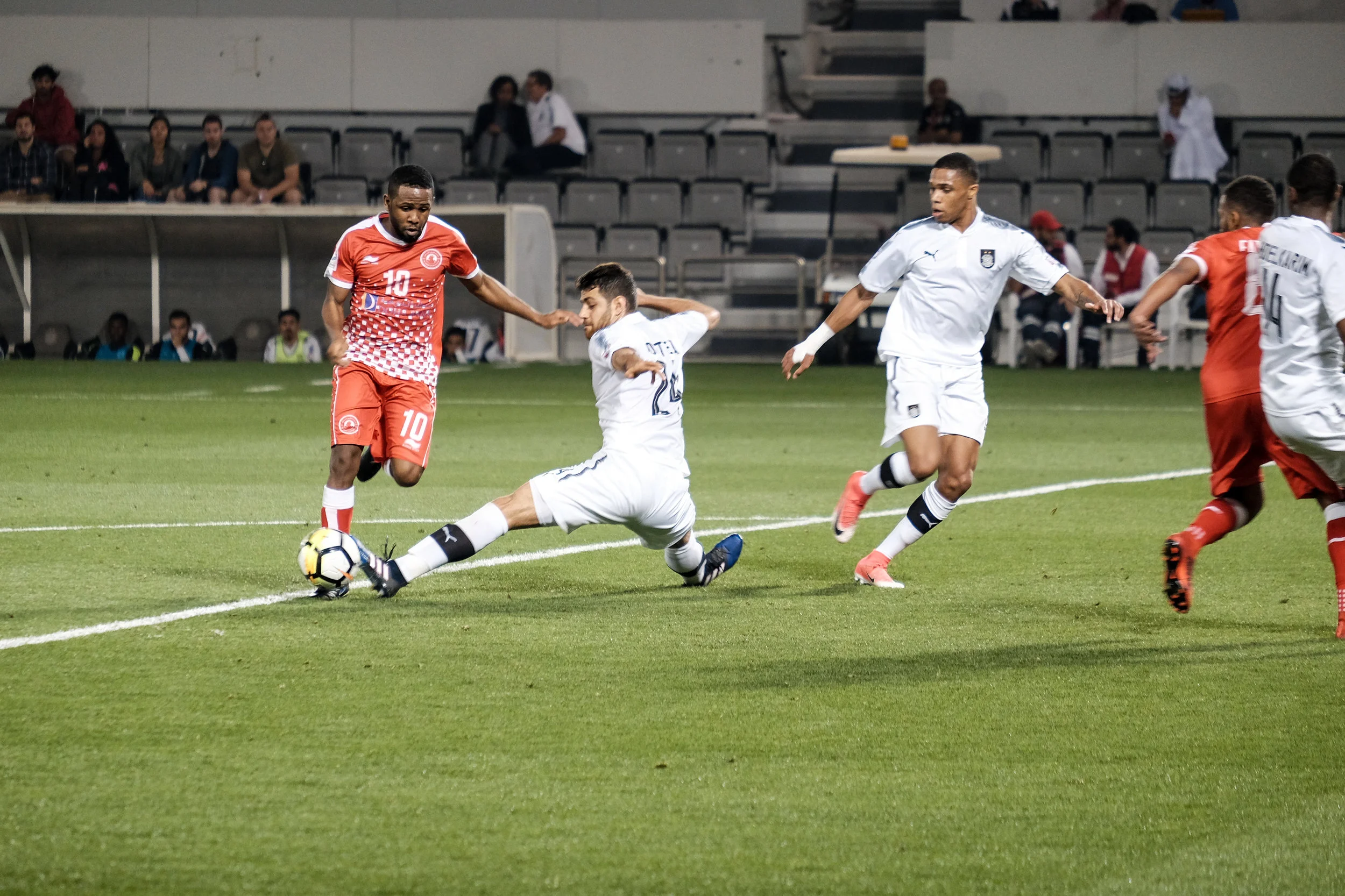
Perfectly timed challenge thrawts an attack.
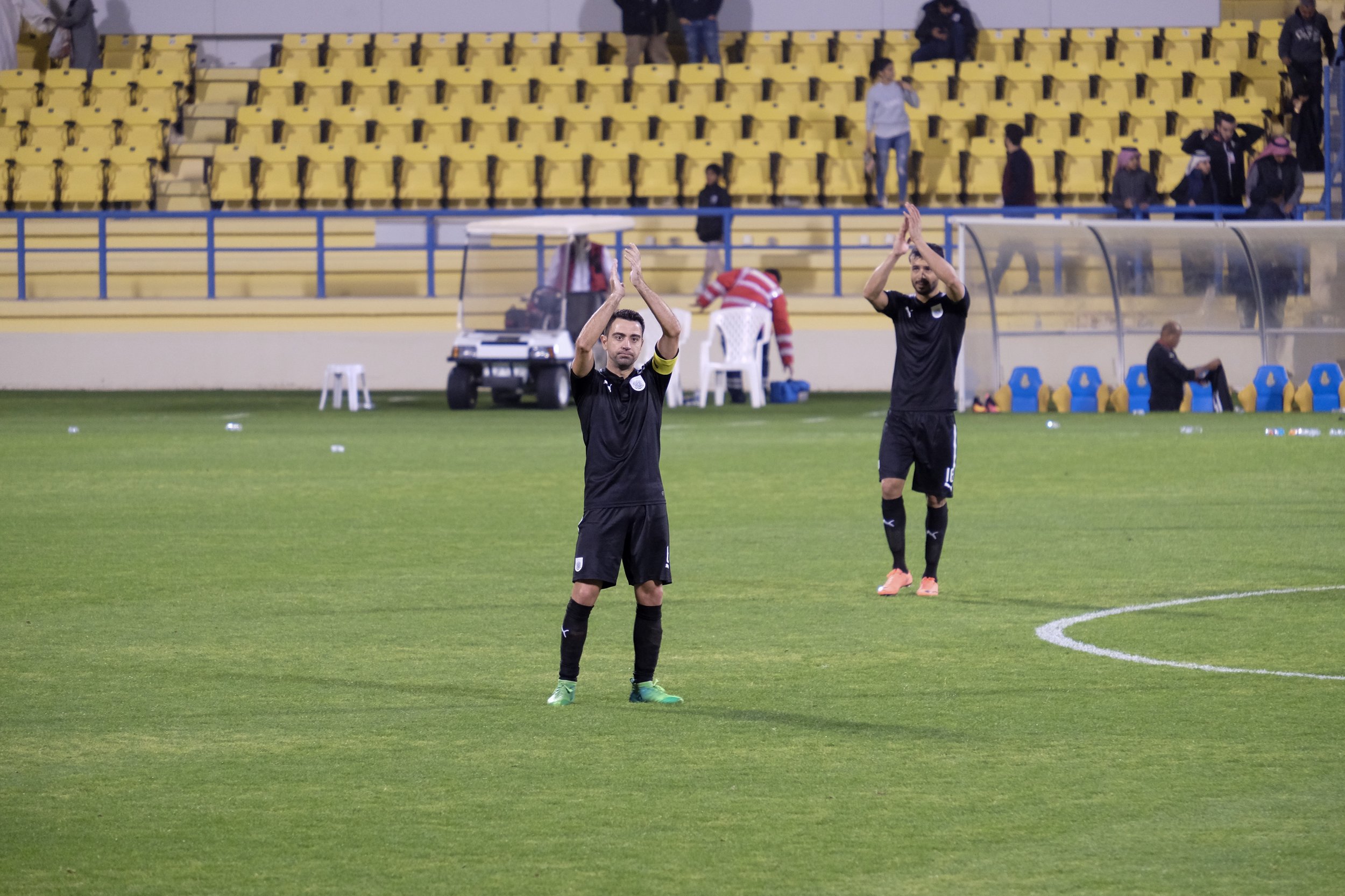
Barcelona and Spain legend Xavi applauds Al Sadd fans after they beat Al Gharafa 0-4 in January 2018.
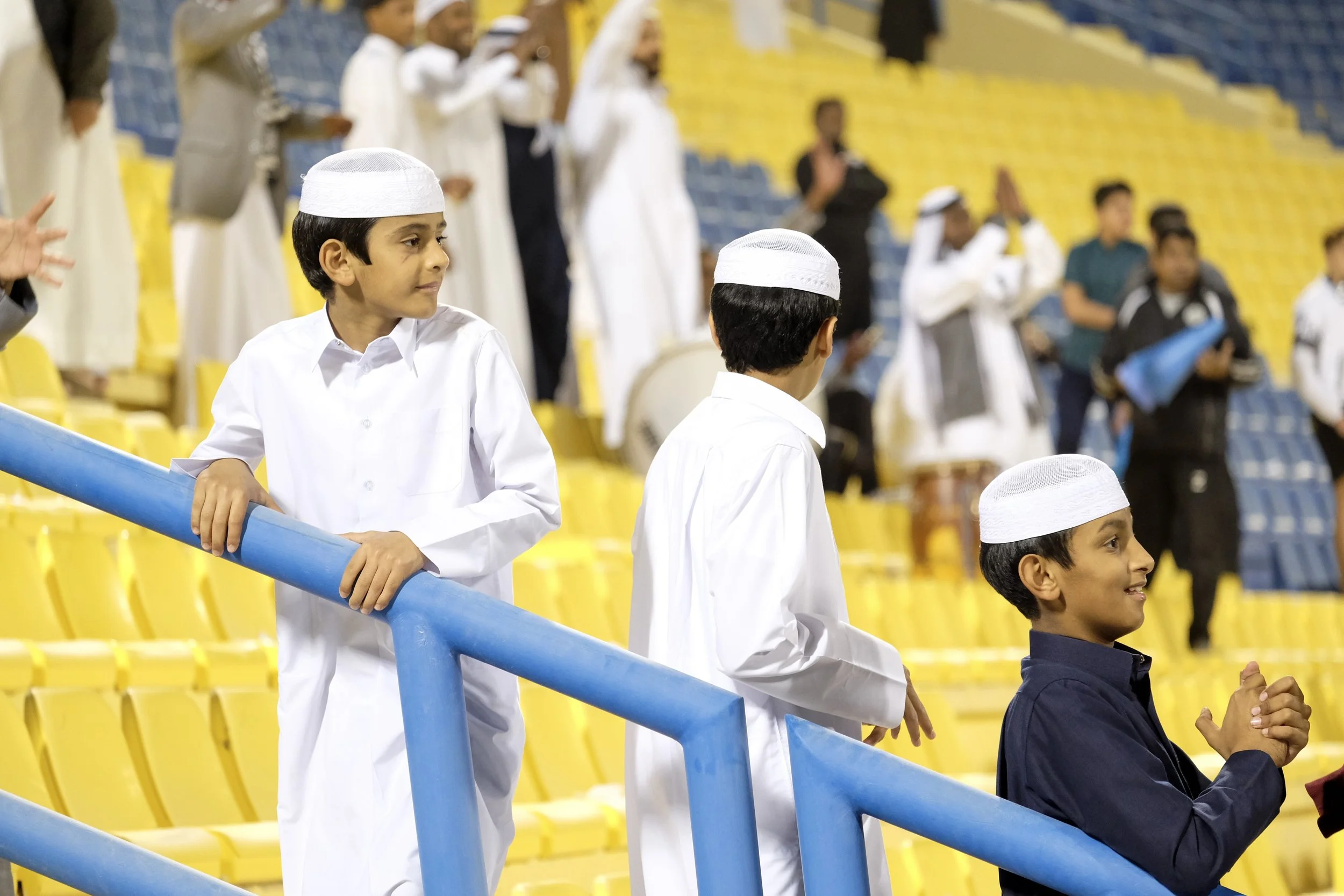
Young Qatari supporters await their heroes at the end of Al Gharafa 0 - 4 Al Sadd at the Thani Bin Jassim Stadium.
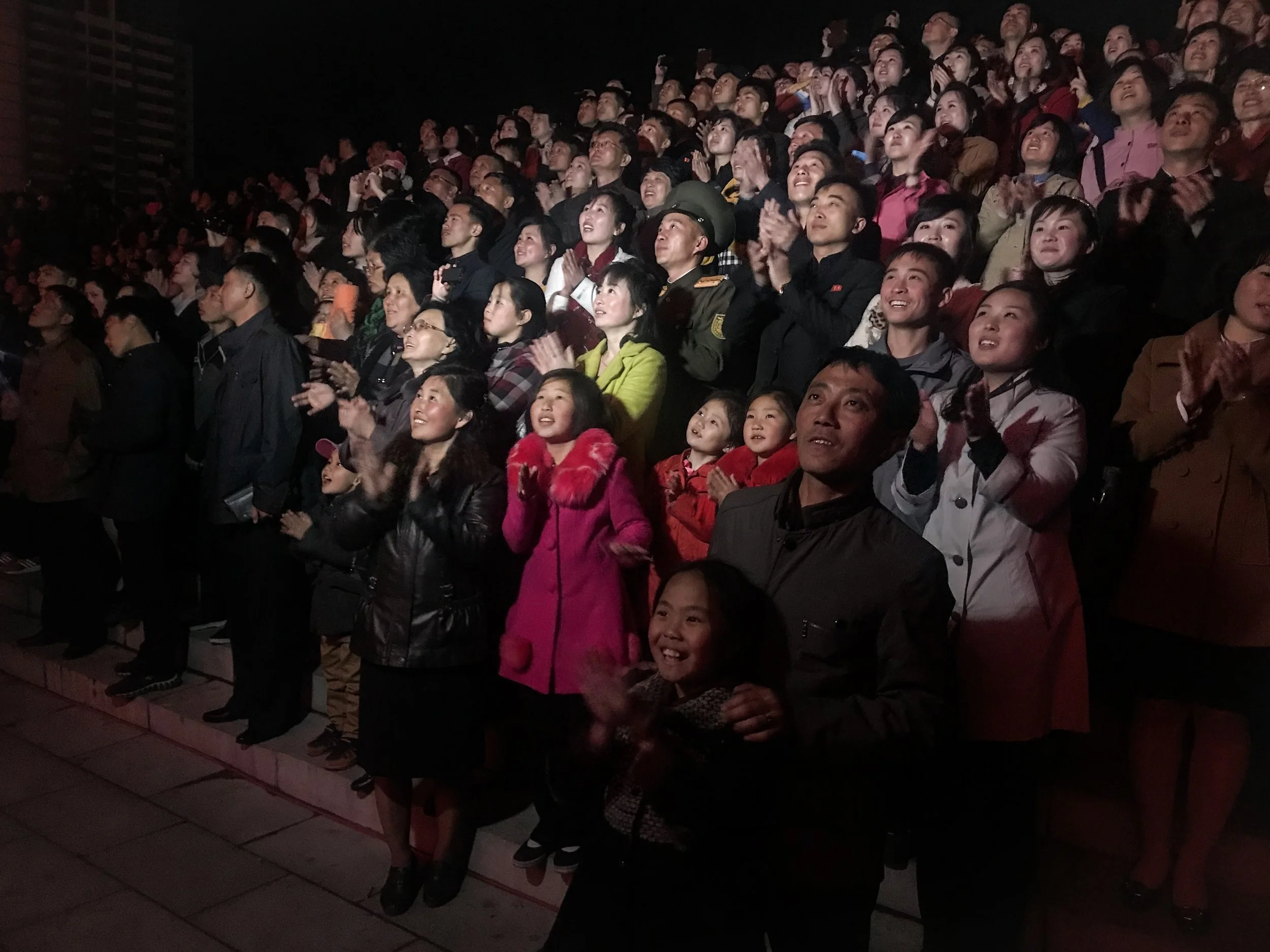
North Koreans take in a fireworks display in the nation's capital Pyongyang to commemorate the Day of the Sun, the birth anniversary of former president Kim Il-sung. As I watched the fireworks I noticed a local film crew shining a light into the crowd to better capture their reactions to the display. I waited until the light was shone on the audience and captured this photograph using my iPhone.
Highly Rated Entry-Lensculture Street Photography Awards 2018. North Korea Pic!
"Damn it" I said to myself as I tried to take a photo with the Fujifilm XH1 on the bus. I then muttered an expletive as I tried the same with my Fuji XT1. My camera batteries had run out and we were about to watch a fireworks display to commemorate the Day of the Sun, birth date of President Kim-Il sung in Pyongyang.
Feeling quite upset with myself I left my camera bag onboard and went with the group with just my iPhone 7 to our viewing point.

The fireworks were as you would expect, flashes of green, red and gold fizzled out over the Taedong River as a crowds oohed and aahed. I snapped the best I could with my phone but I then I noticed something behind me.
On a set of shallow stairs were hundreds of people - soldiers, couples, parents with their children looking up at the fireworks set off next to the Juche Tower. Their faces were only illuminated by a light shone on them by a local camera crew filming parts of the audience intermittently.
I waited until the light beamed on the glaring faces directly behind me and I poked at my phone until I got the best shot possible.
I knew it was one of my better photos from the long weekend tour of the D.P.R.K. as soon as I reviewed it on my phone and I made my way back to the bus in a better mood then when I had left it.
I entered the photograph for LensCultures' street photography awards and received an email a few days later saying I have a 'highly rated entry' that has a 'very good chance of a positive outcome' in the final.
Hopefully it will make the top 25 and feature in exhibitions in Paris and London. Any developments will be reported here!
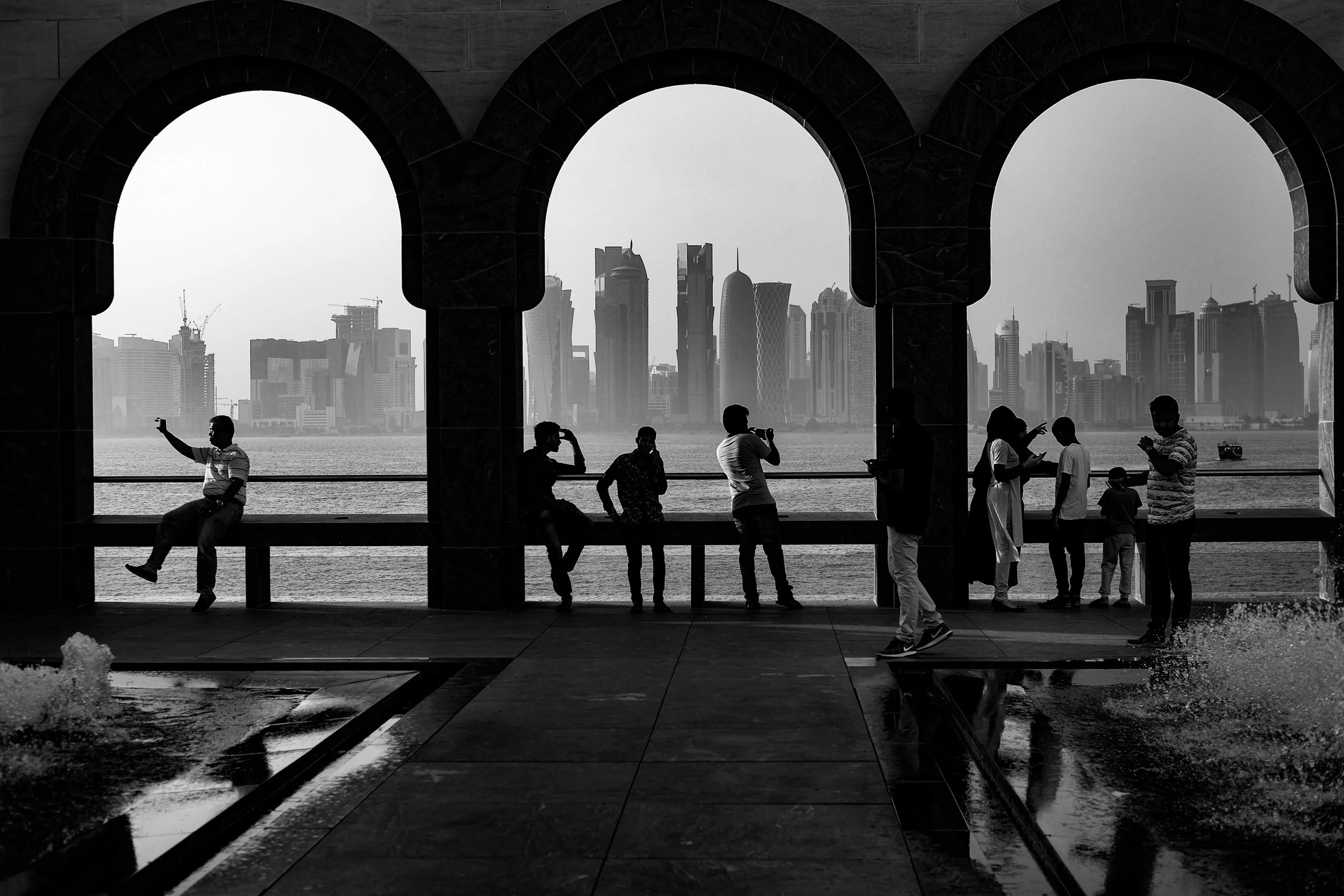
Visitors at the Museum of Islamic Art.
Street Photography in Qatar
One worry I had when packing my bags ahead of a move to Doha, Qatar last August was that my photographic projects would suffer. The desert nation is not very pedestrian friendly and the summer heat can cause even the most robust cameras steam over, making photography next to impossible.
The city is also a building site, gearing up for numerous high profile events such as the 2022 World Cup. A metro, that will connect much of the city, has resulted in traffic mayhem and areas such as of the corniche are gated off in parts.
In addition to the above concerns, photography is banned in certain areas of the city and locals have been known to report people to authorities for highly trivial matters. The worry of upsetting a Qatari, who can get you arrested and deported with the right concern, and highly stratified areas only add to the challenge of getting 'the shot' in Qatar.
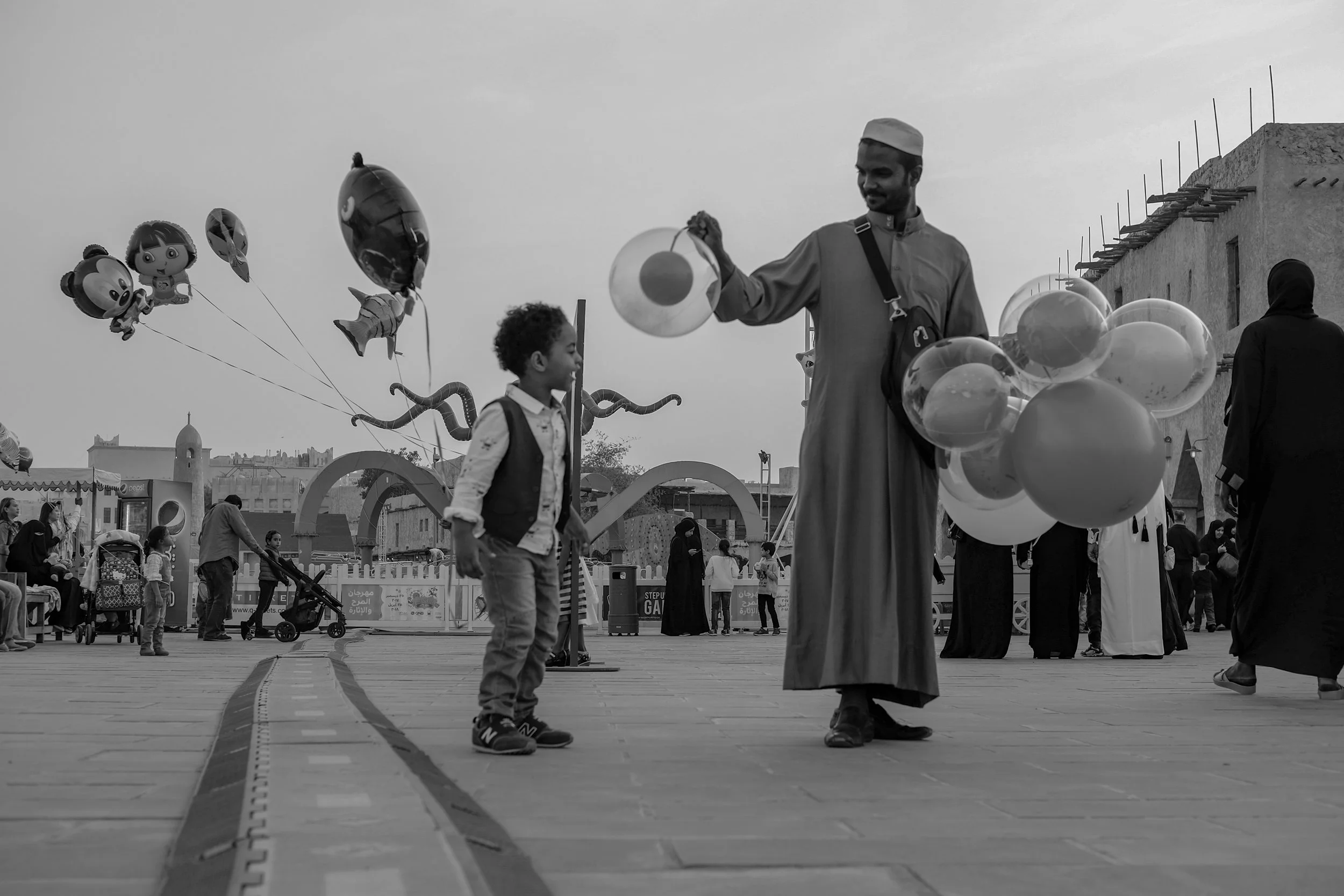
A balloon salesman and a boy in Souq Waqif, Doha.
However, it would be amiss to write off the country as a non-starter for candid street photography as with a little research and trial and error you can unlock areas that resemble an Indiana Jones set or narrow alleyways, reminiscent of the back streets of Delhi.
The place I frequented most in winter was Souq Waqif. One could be forgiven for believing it is a one of the few historical places in the country with its cobbled paths and peeling walls. Yet the large market, stacked with restaurants, coffee shops and stalls selling local gifts, was built in 2006 with a nod to traditional Arabian architecture.
Although, someone not afraid to upset local values could say the items or living things on sale do harp back to a bygone era.
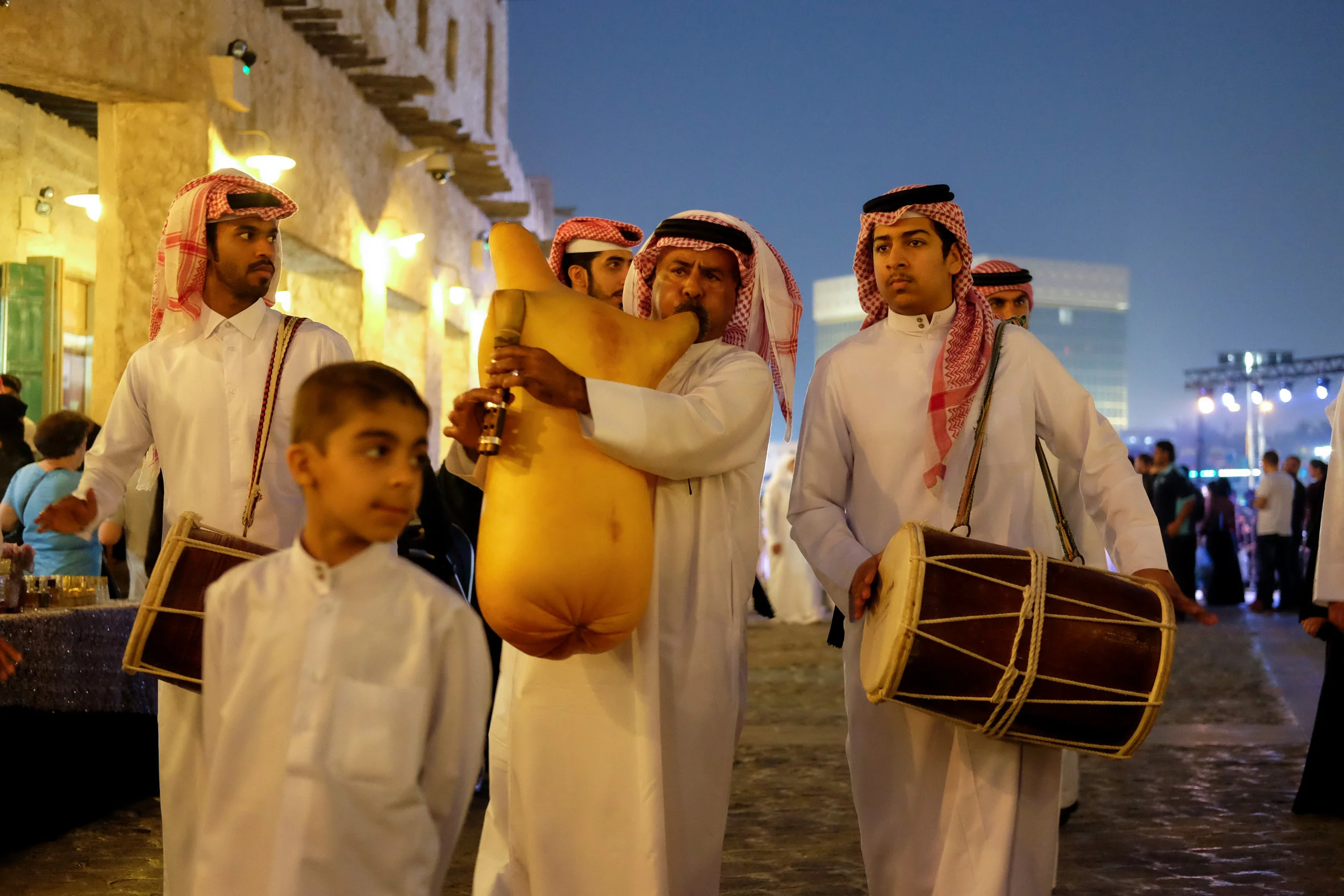
A Qatari band serenade Souq Waqif, Doha on a Friday night.
Souq Waqif is brimming with life on weekend evenings. Delivery men in unusual crimson uniforms swerve their trolleys through the crowds, locals puff on shisha pipes and market traders barter with customers over the price of gold, clothing and even animals such as dogs, cats and mongoose.
On some nights local male and female bands serenade the crowds with Arabian music while on weekend mornings visitors can take in the bird market where pigeons are auctioned off, a reminder that despite the enormous wealth, and its trappings, the country has Arabic culture at its core.
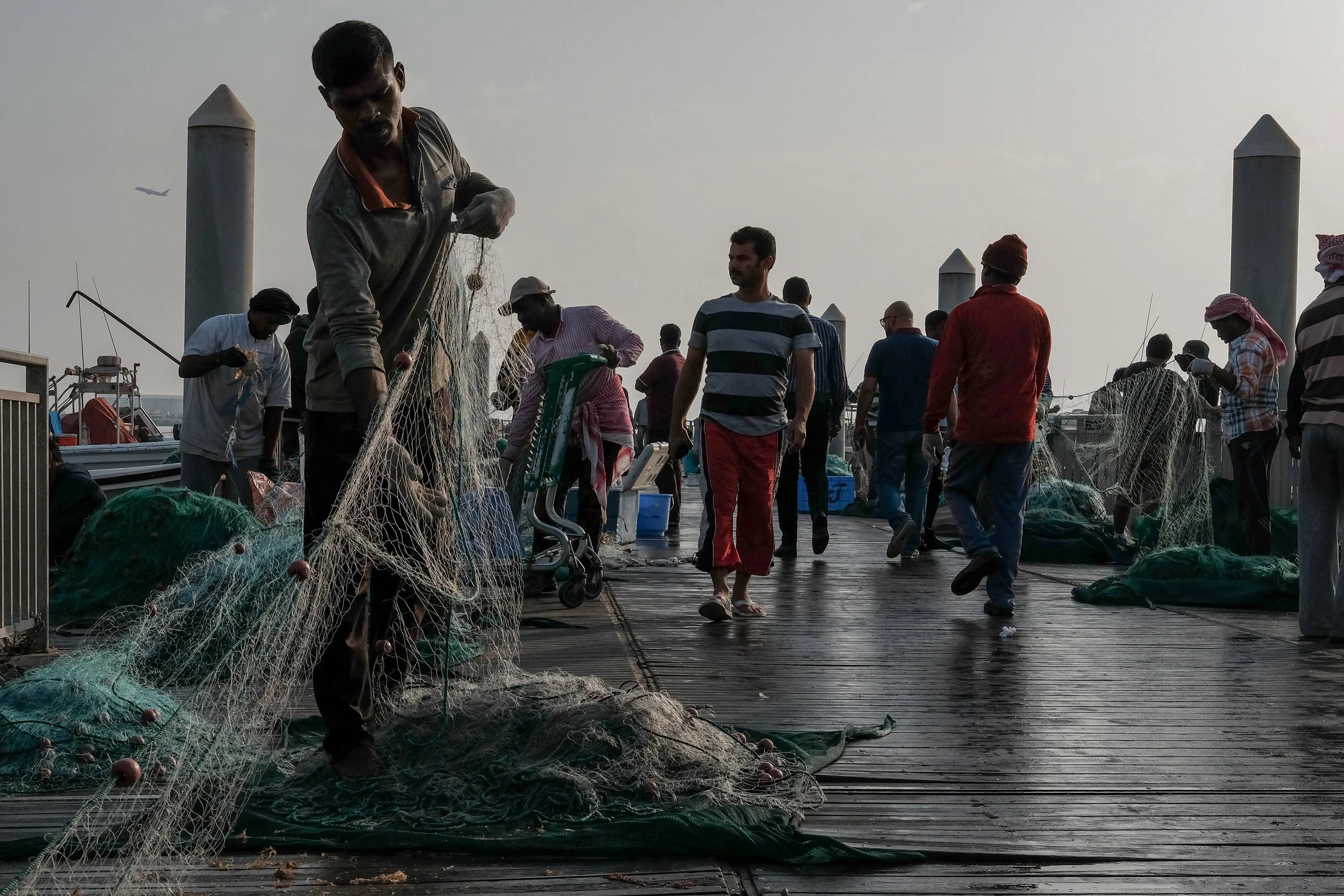
Fisherman untangles his nets at Doha's fish market on a Friday morning.
Away from the Souq, options for street photography can be limited but after meeting other photographers in the city I was recommended the Fish Market on the corniche at sunrise on a Friday morning, the start of the weekend in the Middle East.
Although not brimming with the possibilities of Souq Waqif the Fish Market can yield some good results with the right light. Fisherman of largely south Asian descent can be seen hauling various types of plunder from the sea, across the jetty and to the stalls.
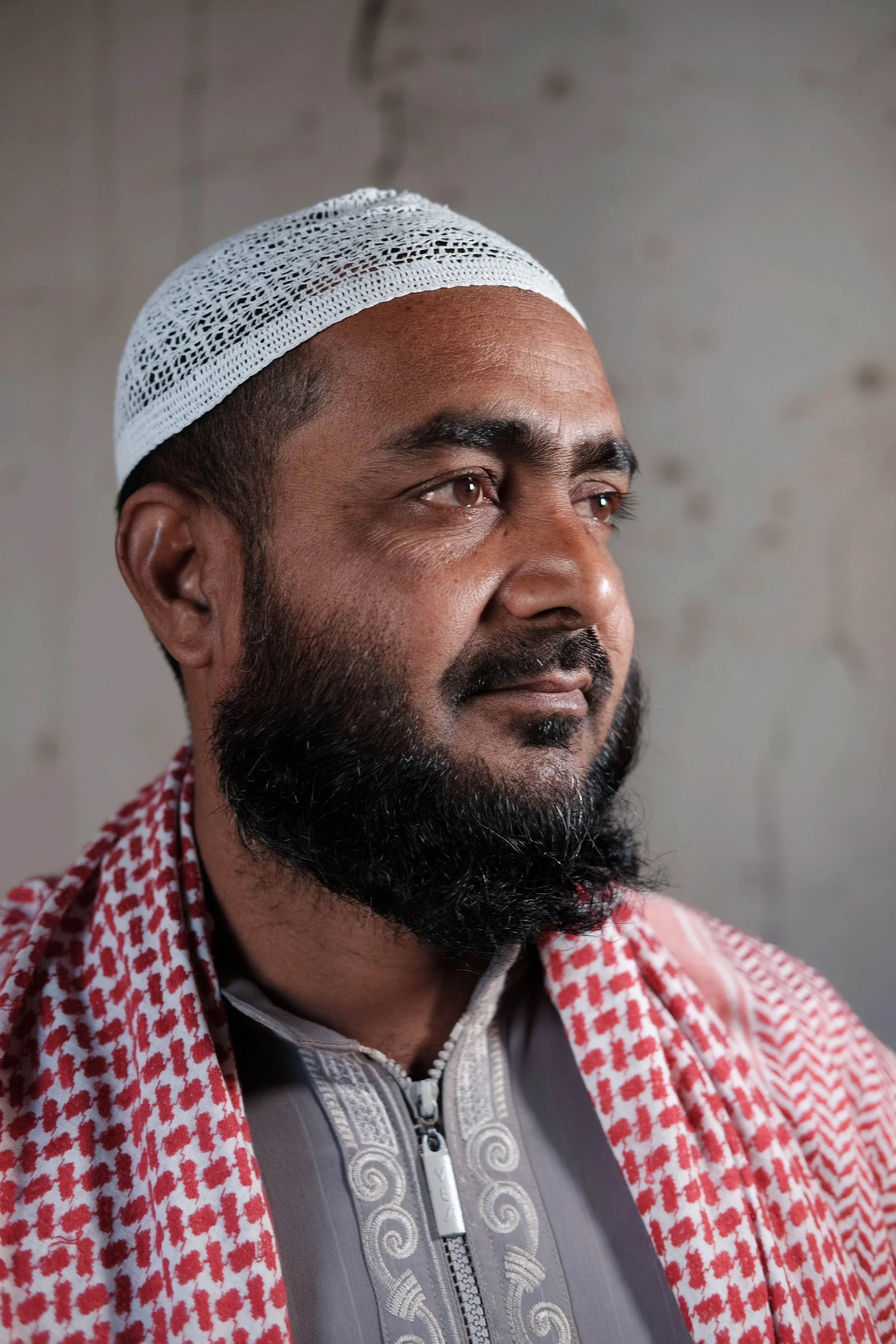
A Bangladeshi migrant worker in Doha.
Crowds gather around the tents and barter with traders over the price of fish, shark, crab and even stingray.
As the sun rises photographers usually migrate to a Bangladeshi area behind the Souq. The unpaved streets and crumbly building facades are a world away from the bright lights of the West Bay, where five star hotels and skyscrapers glimmer, giving a tantalising glimpse of Qatar's oil wealth.
To find the best shots you may have to weave into what appear to be abandoned buildings to find hidden markets and impromptu barber shops. The small rooms also make good spots for portrait photography providing you have a light and willing residents on hand.
Doha is not a London, Hong Kong or Tokyo, cities with endless street photography options. Unless you live in one of the pedestrianised parts of the city it is difficult to walk out of your home and start snapping candid street shots straight away. You have to travel to certain areas at certain times to be able to shoot interesting dexterous documentary photography but it is possible due to fusion of people from across the globe who now call this small Arabian peninsula home.
Find more shots from Qatar here.